Friday, March 3rd will go down in history as the night Danny Williams went all the way to New York (either in person or via satellite isn't clear at time of writing) to appear on Larry King Live to meet Sir Paul McCartney and talk about the annual seal hunt.
Apparently, Danny didn't agree with the Bond assessment that participating in clubbing Canadian sealers was a bad idea.
According to some reports, Larry wanted a federal government representative on air. The Prime Minister's Office, or Loyola's handlers, made a smart political decision and referred the King booker on with the words "Dial +1-709-729-3570. Ask for Danny."
This is all just part of what local author Ray Guy dubbed March Madness, the annual influx of celebrities decrying eastern Canadians as barbarians that has been a fund-raising staple for animal rights groups since the 1970s.
In order to get ready for the Big Show, try checking some of these links:
1. First of all, CBC has a great archive feature from the fifth estate that documents fairly well how the International Fund for Animal Welfare skillfully thwarted Frank Moore's pro-seal hunt news conferences in London and Washington, all the while bringing in millions of dollars to IFAW's coffers.
2. Then for good measure, try out this account by Ray Guy of a 1999 sally by John Efford; imagine Efford and Williams of one mind on any issue. Now admittedly Efford's views are extreme and the real value of Guy's piece is the foreshadowing of Efford's later self-destruction over the offshore, but take a look at the whole piece and you can see a decent account of the long struggle for seal hunt cash.
3. Once you've digested that stuff, let's take a walk into the Bond archives. During last year's March Madness, the Bond Papers managed to get a couple of swipes in.
- This one was aimed at Paul Watson and Richard Dean Anderson.
- My personal favourite was the silicone comment in this one about Anna Nicole Smith deciding not to come to protest the hunt for fear of being shot.
- The ones that got the most hits, aside from the Paul Watson thing, turned out to be a series on former child stars and their current preoccupation with animal rights groups. There's one on Pam Ferdin and her hubby, and then this one that includes some background on a woman from Newfoundland and Labrador now intimately involved in the anti-seal hunt crowd.
4. Finally, for those who still think Danny's Crusade is a good idea, go armed with the knowledge that he will be facing a host who is already good chums with the other guests on the show, namely Paulie McCartney and his wife Heather. She was a guest host for CNN's coverage of the Chuck and Camilla wedding and she's guest-hosted the show before and appeared as a guest as well at various times. Paul's been on a few times as well.
About the only positive thing I can say is that Danny's international television debut will give new meaning to the term March Madness.
Too bad he didn't look for some air time with Larry to boost the campaign against foreign overfishing.
Then again that would involve thinking outside the box or learning from experience.
02 March 2006
Talk is easy when it isn't your money
Fisheries commissar Tom Rideout had a stern warning for financially troubled Fishery Products International (FPI) as the company works to sort out its difficulties and return to profitability.
Talk is easy, Comrade Commissar, when the money you toss about isn't your own.
"I'm telling them and I've told them, don't go coming banging on my door for approvals to ship 60 per cent of their groundfish quotas out of this province. It's not on," Rideout said.Commissar Rideout didn't give any suggestion of what might happen if FPI goes bankrupt in such a scenario. Here's a hint: the last time Rideout was the fisheries commissar, FPI and a bunch of other companies were bailed out with public money.
"And if that means you crumble, you crumble."
Talk is easy, Comrade Commissar, when the money you toss about isn't your own.


01 March 2006
Here we go again...
As if it isn't bad enough that the annual international sealer slaughter is attracting Paul McCartney this year, we now have Premier Danny Williams wanting to sit down and have a chat with the aging Beatle about the seal hunt.
Just like countless premiers before him, Williams seems to think he can achieve a positive result from talking to a guy who is so opposed to the use of animals by humans that he doesn't even like having them as pets.
This quote shows just how little the Prem and his advisors understand about McCartney and his personal agenda:
You see, Sir Paul is a vegan, which is only one step away from being a fruitarian. This guy not only doesn't eat meat of any kind, he also gives a pass to cheese and milk.
So you gotta ask yourself in what universe will it bring anyone any good to sit and have a chat with Sir Paul on an issue where his mind is so closed it has seized up?
Maybe the universe of Danny's scrapbook.
Maybe the universe where some premiers of Newfoundland and Labrador think they always have to be seen to be fighting for Newfoundland and Labrador even when the fight will likely undermine efforts to rebrand the province by increasing the international media coverage of the meeting.
That's the coverage where Danny gets branded as the youngest and uncoolest premier of the old and uncool place where they bash cute little animals over the head with a club and skin them alive. I know that isn't what goes on exactly, but we are talking about the pre-written script for this annual event and Danny ain't gonna re-write the copy from what is now a more lucrative money-generator than the seal hunt ever was.
Of course, that assumes that Sir Paul is willing to meet with Danny.
______________________________________
Update:
Listening to the Fisheries Broadcast on CBC Radio this evening, it starts to get a little clearer what universe chatting with Sir Paul makes sense.
It's the same world inhabitted by John Efford and sealer Mark Small who give the time-honoured arguments. It's more humane to bash seals than to engage in fox hunts. People depend on the fishery for their living. There are plenty of seals. Small even went so far as to believe that once presented with the facts, Sir paul could become a champion of our seal industry.
In other words, this is the same universe inhabited by Our Danny, the place where they don't pay any attention at all.
Guys:
1. McCartney's mind is closed.
2. He doesn't believe there is any valid use for animals by humans. None. Not a one.
3. When you try to engage him in any way you play into his hands and the hands of the people he is raising money for.
Let it rest.
Ooops.
Too late.
The moths are already circling the flame-thrower of Sir Paul's celebrity.
Just like countless premiers before him, Williams seems to think he can achieve a positive result from talking to a guy who is so opposed to the use of animals by humans that he doesn't even like having them as pets.
This quote shows just how little the Prem and his advisors understand about McCartney and his personal agenda:
"I urge everyone, including Sir Paul McCartney, to question the motives of such individuals and to consider the irony of these protest organizations ignoring the plight of our depleted groundfish stocks due to foreign overfishing. Surely this is an ecological disaster worthy of their attention. These organizations do not pay the same attention to the methods used by slaughterhouses and what happens behind those doors. They are silent about the force-feeding of ducks and geese to produce enlarged livers for use as foie gras. Yet they continually assault the seal fishery, which is one of the best managed harvests of wild animals in the world."See, Danny, if you get Sir Paul in a room, he'll explain to you why you need to stop fishing - not manage it better. He'll explain the amount of work he's done to end the foie gras industry and close slaughterhouses.
You see, Sir Paul is a vegan, which is only one step away from being a fruitarian. This guy not only doesn't eat meat of any kind, he also gives a pass to cheese and milk.
So you gotta ask yourself in what universe will it bring anyone any good to sit and have a chat with Sir Paul on an issue where his mind is so closed it has seized up?
Maybe the universe of Danny's scrapbook.
Maybe the universe where some premiers of Newfoundland and Labrador think they always have to be seen to be fighting for Newfoundland and Labrador even when the fight will likely undermine efforts to rebrand the province by increasing the international media coverage of the meeting.
That's the coverage where Danny gets branded as the youngest and uncoolest premier of the old and uncool place where they bash cute little animals over the head with a club and skin them alive. I know that isn't what goes on exactly, but we are talking about the pre-written script for this annual event and Danny ain't gonna re-write the copy from what is now a more lucrative money-generator than the seal hunt ever was.
Of course, that assumes that Sir Paul is willing to meet with Danny.
______________________________________
Update:
Listening to the Fisheries Broadcast on CBC Radio this evening, it starts to get a little clearer what universe chatting with Sir Paul makes sense.
It's the same world inhabitted by John Efford and sealer Mark Small who give the time-honoured arguments. It's more humane to bash seals than to engage in fox hunts. People depend on the fishery for their living. There are plenty of seals. Small even went so far as to believe that once presented with the facts, Sir paul could become a champion of our seal industry.
In other words, this is the same universe inhabited by Our Danny, the place where they don't pay any attention at all.
Guys:
1. McCartney's mind is closed.
2. He doesn't believe there is any valid use for animals by humans. None. Not a one.
3. When you try to engage him in any way you play into his hands and the hands of the people he is raising money for.
Let it rest.
Ooops.
Too late.
The moths are already circling the flame-thrower of Sir Paul's celebrity.
The Brand State: If you have to tell them...
In this news release from the provincial government on a future Council of the Federation meeting, notice two things.
First, notice that the province will "shine". This is the sort of verbal flatulence that doesn't really mean anything to anyone, especially anyone passingly familiar with a meeting of Canada's premiers.
Second, and more importantly, notice the quote from Premier Danny Williams:
But here's the thing.
There's a general rule about these sorts of claims when they are so blatantly worked into every written and spoken phrase uttered by anyone connected to the contract:
They aren't persuasive.
You see, things that most people would recognize as "world-class", for example, never have to be described as "world-class". Those that do lay claim to such a crapola title, are really saying "We are posers."
Who would describe the Mona Lisa as a "world-class" artwork or The Louvre as a "world-class" museum?
Not the French, that's for sure.
Or anyone else with half a clue.
The thing about being truly cool is never having to say you are.
Danny and his advertisers are following a trend begun almost a decade ago with Tony Blair's Cool Britannia campaign. The hip New Labour prime minister of Britain wanted to extend his work in changing the perception of the Labour Party with changing perceptions of the whole country he was elected to lead. The campaign collapsed in short order, with howls of derision from those who found the approach a bit too pretentious and smarmy.
Countries like Jamaica, though, have successfully branded the country and overcome negative attitudes toward developing countries based on perceptions of economic and social backwardness.
Jamaica could count on a solid foundation of positive images - of creativity and "coolness" - built not only by Bob Marley but also by the international business community. As the Jamaica Gleaner reports, since 1988, investment by American companies in the Caribbean country have risen by 200% largely "because the country is politically stable, and because of its physical beauty, the warmth and friendliness of its people, its strategic geographical location, and its preferential trade agreements with the US."
The ultimate goal of state branding is to boost economic activity - tourism, trade, and investment - in a highly competitive international environment.
That's where the real challenge lies for anyone want to rebrand Newfoundland and Labrador.
On the tourism front, things are possible and the similarities between New Zealand and Newfoundland and Labrador are striking. New Zealand successfully turned its geographic isolation from a negative to a positive, emphasizing that the country was at the edge of the world.
Sound familiar?
The New Zealanders have managed to create a positive brand for their country, without slagging a corporate brand in the process.
The "edge" concept is one New Zealanders have used successfully beyond tourism alone. There's even a website linking to all things Kiwi, including linking New Zealanders who have left their home seeking success in other parts of the world.
In business though, the potential for success is mixed and that's largely due to local attitudes.
Political statements on development projects from Voisey's Bay and Brian Tobin's "not one teaspoon" comment to Danny Williams' more recent dealings with Abitibi and the Hebron partners could create a reputation for this province as being decidedly unfriendly to investment. The rhetoric plays well at home - both Tobin and Williams enjoyed local popularity - but holding out foreign investors as potential skinflints or carpetbaggers doesn't do much to encourage them to bring their capital to a place that needs sizeable capital injections to develop its resources like offshore oil and gas.
In the fishery, the potential to develop a locally-based industry using local expertise and either local - or more likely - outside capital investment is hamstrung by political and social attitudes that look on the fishery as a social program or a local birthright rather than a business that is truly global and must be competitive.
Those attitudes, manifest in much of recent public dialogue under both Roger Grimes' and Danny Williams' administrations could go a long way to undermining whatever brand Williams and his advertising agency try to create. As Peter van Hamm writes, "[l]ike branded products, branded states depend on trust and customer satisfaction."
Whether we are talking about the United Kingdom, Jamaica, New Zealand, South Africa or Ireland - all "brand states" - the advertising and other claims built around the brand are based in something substantive. While advertising can open new opportunities by reshaping the image, making the new brand a success depends more than anything else on reputation and experience. The claims made in the advertising or the branding campaign must be matched by performance or the whole thing falls apart.
So, if Newfoundland and Labrador is truly the coolest and youngest province in Canada, we won't have to tell people. They'll see it in what occurs. They'll know it from first hand experience or from people who've had the positive experience themselves.
If you have to tell someone you are "cool" or "hip" or "new" or "world-class", then odds are good you aren't any of those things.
And the experienced global brand consumer knows that already.
First, notice that the province will "shine". This is the sort of verbal flatulence that doesn't really mean anything to anyone, especially anyone passingly familiar with a meeting of Canada's premiers.
Second, and more importantly, notice the quote from Premier Danny Williams:
"I have every confidence that we will shine and demonstrate why we are indeed Canada‚’s youngest and coolest province, as we welcome hundreds of delegates from across the country." [Emphasis added]You'll be hearing much more of that phrase - youngest and cooolest province - as Danny moves ahead with his plans to "rebrand" the province. There's a considerable amount of cash tied up in this and, as near as can be determined, the work is being done by the same advertising guys who now have the tourism account.
But here's the thing.
There's a general rule about these sorts of claims when they are so blatantly worked into every written and spoken phrase uttered by anyone connected to the contract:
They aren't persuasive.
You see, things that most people would recognize as "world-class", for example, never have to be described as "world-class". Those that do lay claim to such a crapola title, are really saying "We are posers."
Who would describe the Mona Lisa as a "world-class" artwork or The Louvre as a "world-class" museum?
Not the French, that's for sure.
Or anyone else with half a clue.
The thing about being truly cool is never having to say you are.
Danny and his advertisers are following a trend begun almost a decade ago with Tony Blair's Cool Britannia campaign. The hip New Labour prime minister of Britain wanted to extend his work in changing the perception of the Labour Party with changing perceptions of the whole country he was elected to lead. The campaign collapsed in short order, with howls of derision from those who found the approach a bit too pretentious and smarmy.
Countries like Jamaica, though, have successfully branded the country and overcome negative attitudes toward developing countries based on perceptions of economic and social backwardness.
Jamaica could count on a solid foundation of positive images - of creativity and "coolness" - built not only by Bob Marley but also by the international business community. As the Jamaica Gleaner reports, since 1988, investment by American companies in the Caribbean country have risen by 200% largely "because the country is politically stable, and because of its physical beauty, the warmth and friendliness of its people, its strategic geographical location, and its preferential trade agreements with the US."
The ultimate goal of state branding is to boost economic activity - tourism, trade, and investment - in a highly competitive international environment.
That's where the real challenge lies for anyone want to rebrand Newfoundland and Labrador.
On the tourism front, things are possible and the similarities between New Zealand and Newfoundland and Labrador are striking. New Zealand successfully turned its geographic isolation from a negative to a positive, emphasizing that the country was at the edge of the world.
Sound familiar?
The New Zealanders have managed to create a positive brand for their country, without slagging a corporate brand in the process.
The "edge" concept is one New Zealanders have used successfully beyond tourism alone. There's even a website linking to all things Kiwi, including linking New Zealanders who have left their home seeking success in other parts of the world.
In business though, the potential for success is mixed and that's largely due to local attitudes.
Political statements on development projects from Voisey's Bay and Brian Tobin's "not one teaspoon" comment to Danny Williams' more recent dealings with Abitibi and the Hebron partners could create a reputation for this province as being decidedly unfriendly to investment. The rhetoric plays well at home - both Tobin and Williams enjoyed local popularity - but holding out foreign investors as potential skinflints or carpetbaggers doesn't do much to encourage them to bring their capital to a place that needs sizeable capital injections to develop its resources like offshore oil and gas.
In the fishery, the potential to develop a locally-based industry using local expertise and either local - or more likely - outside capital investment is hamstrung by political and social attitudes that look on the fishery as a social program or a local birthright rather than a business that is truly global and must be competitive.
Those attitudes, manifest in much of recent public dialogue under both Roger Grimes' and Danny Williams' administrations could go a long way to undermining whatever brand Williams and his advertising agency try to create. As Peter van Hamm writes, "[l]ike branded products, branded states depend on trust and customer satisfaction."
Whether we are talking about the United Kingdom, Jamaica, New Zealand, South Africa or Ireland - all "brand states" - the advertising and other claims built around the brand are based in something substantive. While advertising can open new opportunities by reshaping the image, making the new brand a success depends more than anything else on reputation and experience. The claims made in the advertising or the branding campaign must be matched by performance or the whole thing falls apart.
So, if Newfoundland and Labrador is truly the coolest and youngest province in Canada, we won't have to tell people. They'll see it in what occurs. They'll know it from first hand experience or from people who've had the positive experience themselves.
If you have to tell someone you are "cool" or "hip" or "new" or "world-class", then odds are good you aren't any of those things.
And the experienced global brand consumer knows that already.
-srbp-
Sir Robert's birthday
Sir Robert Bond was born February 25th, 1857, as John Gushue reminds us.
John's got a good link to a brief bio of Sir Robert.
John's got a good link to a brief bio of Sir Robert.
28 February 2006
Pot? Meet kettle
Andy Wells, arguably the rudest mayor in Canada, described the behaviour of some homeowners in St. John's this way:
Some simple observations:
1. The city already has an overnight parking ban. If cars are on the street during the ban, tow them and stop the bitching, Andy.
2. If the cars are on the street during the daytime, odds are good that people are trying to shovel out their driveways. Excrement occurs. Get over it.
3. Given that city council hasn't increased the size of its snowclearing fleet in the past four years despite growth in the number of streets to be ploughed, then the real problem council is having keeping the streets cleared might really be due to ...wait for it...an infrastructure shortage.
Part of the problem in clearing streets might have to do with a lack of proper planning by Wells and his amigos at the little bandito factory on Gower Street. Gee. There's a surprise. It's not like water mains didn't explode in the downtown during the last municipal election much to Wells' embarrassment. It took council a week to fix it and they really didn't get around to it until the thing was splashed across the television screens thanks to the efforts of at large candidate Simon Lono.
Oh yeah. In the "ignorant" category. Let's add Wells calling Lono "some little twit" for daring to point out that Wells' comments that everything was rosey in the city was sheer nonsense.
4. Why bandito factory? Well, Wells is fond of tossing rules to the winds as he sees fit. He's like a parody of the guys in the old Westerns who supposedly uttered the line "Badges? We dun need no stinkin' badges." That just leads us logically to...
5. The raging hypocrisy in Wells criticizing other people for taking the world on their backs to the detriment of all. Maybe Wells is really just annoyed that people are horning in on what, to now has been his exclusive territory: be ignorant and doing things that are grossly ill-considered.
6. As for the mayor's own personal familiarity with things ill-considered and ignorant, may we humbly offer the following examples:
- Trying to ram through a hefty pay raise for himself and fellow councilors that would not only fatten his current bank account and which broke the rules for setting council pay, but would also swell his pension. We'll call that one ill-considered.
- Gerrymandering the terms of reference for the consultant hired to look at the pay raise after
his little pay hike was outed by The Telegram. Let's call that ill-considered too.
- Ignorant? I have too many examples from Well's career to list here, but let's just settle for his boorish comment to a former mayor and current councilor that in a battle of wits with Wells, she was unarmed.
Wells' penchant for bullying and insulting his opponents suggests the opposite, of course.
But that's another post.
"It's so ignorant. I can't think of anything more ignorant or ill-considered."Wells is miffed because some residents of the capital city are supposedly parking their cars in such a way as to keep snow from being pushed into their driveways by council snow clearing crews.
Some simple observations:
1. The city already has an overnight parking ban. If cars are on the street during the ban, tow them and stop the bitching, Andy.
2. If the cars are on the street during the daytime, odds are good that people are trying to shovel out their driveways. Excrement occurs. Get over it.
3. Given that city council hasn't increased the size of its snowclearing fleet in the past four years despite growth in the number of streets to be ploughed, then the real problem council is having keeping the streets cleared might really be due to ...wait for it...an infrastructure shortage.
Part of the problem in clearing streets might have to do with a lack of proper planning by Wells and his amigos at the little bandito factory on Gower Street. Gee. There's a surprise. It's not like water mains didn't explode in the downtown during the last municipal election much to Wells' embarrassment. It took council a week to fix it and they really didn't get around to it until the thing was splashed across the television screens thanks to the efforts of at large candidate Simon Lono.
Oh yeah. In the "ignorant" category. Let's add Wells calling Lono "some little twit" for daring to point out that Wells' comments that everything was rosey in the city was sheer nonsense.
4. Why bandito factory? Well, Wells is fond of tossing rules to the winds as he sees fit. He's like a parody of the guys in the old Westerns who supposedly uttered the line "Badges? We dun need no stinkin' badges." That just leads us logically to...
5. The raging hypocrisy in Wells criticizing other people for taking the world on their backs to the detriment of all. Maybe Wells is really just annoyed that people are horning in on what, to now has been his exclusive territory: be ignorant and doing things that are grossly ill-considered.
6. As for the mayor's own personal familiarity with things ill-considered and ignorant, may we humbly offer the following examples:
- Trying to ram through a hefty pay raise for himself and fellow councilors that would not only fatten his current bank account and which broke the rules for setting council pay, but would also swell his pension. We'll call that one ill-considered.
- Gerrymandering the terms of reference for the consultant hired to look at the pay raise after
his little pay hike was outed by The Telegram. Let's call that ill-considered too.
- Ignorant? I have too many examples from Well's career to list here, but let's just settle for his boorish comment to a former mayor and current councilor that in a battle of wits with Wells, she was unarmed.
Wells' penchant for bullying and insulting his opponents suggests the opposite, of course.
But that's another post.
Wait times guarantee joins custodial management on election scrap heap
It doesn't take an advanced degree in English language interpretation to understand that health minister Tony Clement is realizing the Connie "wait times guarantee" is a bust and that the Liberal administration of Paul Martin already committed cash to deal with wait times.
As Canadian Press is reporting, the Connie in power don't plan on adding any new cash to deal with wait times.
Stephen Harper is waffling somewhat on senate reform.
Now the fabled wait times guarantee might well be headed for the growing pile of unfulfilled Connie election promises.
Stephen Harper hasn't been in office a month yet.
As Canadian Press is reporting, the Connie in power don't plan on adding any new cash to deal with wait times.
Health is under provincial jurisdiction, and the federal government has traditionally brought provinces into national programs with new funding. But the Conservatives say they don't intend to offer new money for care guarantees.The Connies already abandoned their commitment to move immediately to extend Canadian jurisdiction over the Nose and Tail of the Grand Banks in favour of a policy that is essentially the one already being followed by the previous Liberal administration.
Clement argues the money is already available under the 2004 First Ministers' Health Accord, signed by the former Liberal government. It included a fund for cutting wait times.
"From our interpretation and our perspective, based on that $41 billion extra over 10 years, there already is some money allocated."
Stephen Harper is waffling somewhat on senate reform.
Now the fabled wait times guarantee might well be headed for the growing pile of unfulfilled Connie election promises.
Stephen Harper hasn't been in office a month yet.
Harper promises yaktion on senate elections
Proponents of senate reform will have to wait until at least the fall before any action from the Harper administration despite pledges in the Connie election platform that senators will be elected in future.
Initial reports from Alberta Premier Ralph Klein indicated there would be senate elections this fall.
The prime minister's press secretary subsequently clarified the remarks saying that the prime minister would have discussions about senate elections this fall.
It remains unclear whether the prime minister proposes to hold elections organized by Elections Canada, whether elections would be organized by provincial premiers or if the process for selecting senate nominees would be turned over to provincial premiers to determine.
According to Canadian Press,
Initial reports from Alberta Premier Ralph Klein indicated there would be senate elections this fall.
The prime minister's press secretary subsequently clarified the remarks saying that the prime minister would have discussions about senate elections this fall.
"The premier didn't mean to say that there would be national elections for senators this fall," said Marisa Etmanski. "He clarified (to me) that there would be discussions this fall on Senate elections."There is a senate vacancy in Newfoundland and Labrador that would be eligible for election under a new process.
These discussions would be about when the elections will take place and what would be involved in the process, said Etmanski.
It remains unclear whether the prime minister proposes to hold elections organized by Elections Canada, whether elections would be organized by provincial premiers or if the process for selecting senate nominees would be turned over to provincial premiers to determine.
According to Canadian Press,
There is no constitutional change required to appoint senators chosen by voters.This isn't quite true. The senate provides for senators to be appointed by the Governor in Council according to certain set of basic criteria. Without a constitutional amendment, an senator chosen by election would still have to be approved by the Governor in Council and meet the property-holding and other requirements established in the Constitution.
27 February 2006
Night Stalker passes away
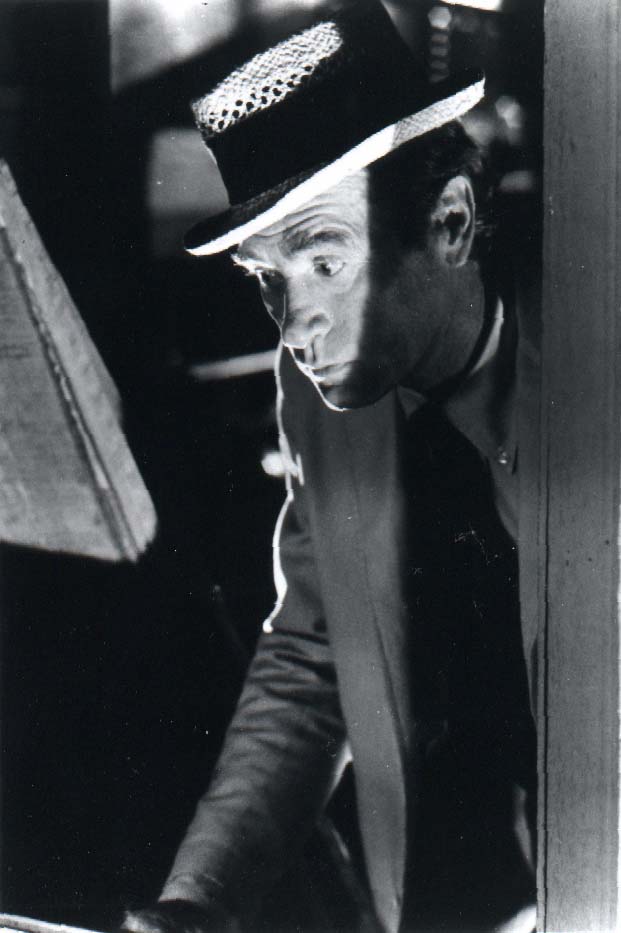
Television and motion picture actor Darren McGavin passed away on February 25, age 83.
McGavin was best known for his portrayal of Carl Kolchak, a wire service reporter chasing ghouls, ghosts and spectres in the short-lived series Kolchak: the Night Stalker.
Kolchak was the inspiration Chris Carter used for The X-Files. McGavin made two guest appearances on the X-Files as retired special agent Arthur Dales, an agent who had previously investigated X-Files.
Gordo gets confused back at 101 Colonel By

Gord O'Connor, right, the soldier cum lobbyist cum newly minted minister of national defence is obviously confused about his new job.
Responding to questions about the prospects for a new battalion of soldiers for Goose Bay - promised during the last election - O'Connor responded that in Goose Bay that he can train soldiers and deploy them from there.
"There is a vast training area related to Goose Bay. I wouldn't have any problems, either, finding a training area for this battalion, so I can train this battalion at Goose Bay, and I can deploy them out of Goose Bay." [Emphasis added]Problem is that training soldiers is not Gordo's job any more.
Training soldiers - indeed of deciding on the force mix, basing and procurement (how many soldiers, sailors and air crew using what number of weapons and where deployed) - is the responsibility of Canada's military leadership based on the policy objectives set by the minister and the administration.
 That's where Gordo started off wrongly when he supposedly authored the Conservative Party's defence "policy". He didn't actually give a policy. He didn't tell us why we have a military and to what policy ends they should be put. Rather he focused largely on the stuff that is how a defence policy is actually implemented. He gave us the stuff that chief of defence staff Rick Hillier and his senior commanders should decide.
Now the odd thing in all this is that when faced with questions about his own substantive conflict of interest in procurement, Gordo stated publicly that his role isn't to make the actual procurement choices. According to Gordo, those decisions, like which transport aircraft to buy, come from the military leadership, preferably without the sort of porkbarrelling and partisan interference we saw during both the Mulroney and Chretien administrations.
O'Connor's confusion is something discussed on the Bond Papers before. His basing commitments and the associated pledge to raise thousands of new infantry soldiers all signal a return to the very bad old days at National Defence when defence policy consisted largely of political pork decisions. In those days Canada bought equipment, based soldiers and did a whole bunch of other things based not on the cost-effectiveness of the decision but on the partisan benefit to be gained from the spending.
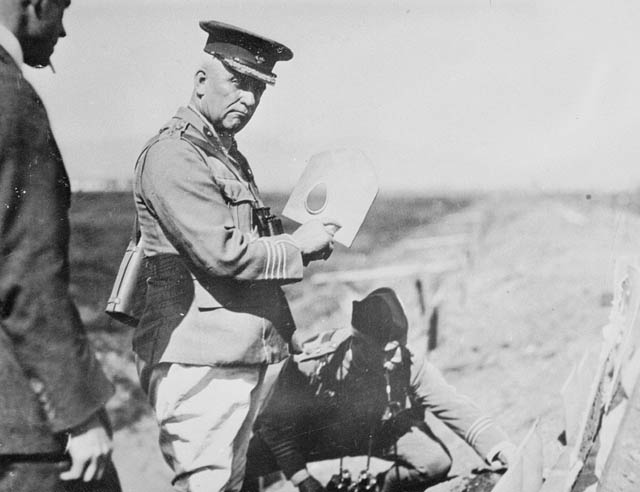 Gordo is pushing us back to a position not far removed from the time of Sam Hughes and the MacAdam shield shovel, left. It's an all-too-common situation in Canadian defence policy but many of us thought those days were gone.
Sam Hughes made a raft of truly horrid military policy decisions based on his unfounded belief that he knew far better than the professional military what Canadian defence forces needed. Gordo, the former soldier, seems to have similar beliefs, at least when he isn't trying to sidestep questions about his own conflicts of interest.
Fundamentally, O'Connor's comments on Goose Bay are one of the reasons why some time ago, Bond Papers offered the view that former soldiers, sailors or fliers made the most abysmal of national defence ministers.
What we seem headed toward in Canada is a bout of politically-inspired defence procurement that has little if anything to do with the proper defence of Canada. We will likely spend billions and have little to show for it of any substance in the end. At the same time we will have lost in the process the military that highly competent professional soldiers like Rick Hillier have been working to create.
In Goose Bay, though, the true cost of Gordo's old-fashioned views may well reap the most painful cost. Residents of that community may live in the hope of the cash coming from 650 soldiers that likely will never show up. For one thing, the Canadian Forces have been having difficulties meeting existing military expansion targets. O'Connor's commitments which are an order of magnitude beyond current military plans are likely to be totally unattainable.
For another thing, O'Connor may not survive long as minister. His successor may not share Gordo's penchant for goals that are unattainable and, in many respects, undesirable.
Taken in that context, Newfoundland and Labrador Premier Danny Williams gave residents of Labrador good advice:
"I would have to say to the residents of Goose Bay not to be too optimistic to see anything in the first 12 months, and then we'll be looking for strong signs after that," Williams said.The only variation that could be added is simply this: don't be too optimistic to see anything coming from O'Connor's promises.
24 February 2006
The floorwalker speaks, yet again
Yesterday's appointment of former Liberal cabinet minister Chuck Furey to head Elections Newfoundland and Labrador is drawing fire from both the Liberals and the New Democrats.
As the CBC story puts it:
Rideout's quote to CBC is pretty funny, for those with long political memories:
So how long was it, Tom?
My clock doesn't measure nano-seconds.
As the CBC story puts it:
Despite his Liberal past, Furey has become friendly with governing Tories. He is close to Williams, and when Williams was Opposition leader, Furey even attended a Tory rally against a Liberal Lower Churchill proposal.The government is deploying Tom Rideout, the deputy prem to defend the whole affair, since Premier Danny Williams is on Ottawa being entertained by the Prime Minister.
Rideout's quote to CBC is pretty funny, for those with long political memories:
Deputy Premier Tom Rideout brushed aside criticism from the Opposition.Tom should know. It took the former Liberal only a few minutes to change his partisan coat in the early 1980s and win himself a seat in Brian Peckford's cabinet.
"How long does it take to shed your political colours?" Rideout said.
So how long was it, Tom?
My clock doesn't measure nano-seconds.
23 February 2006
Some good choices and an odd one
Prime Minister Stephen Harper announced today that Mr. Justice Marshall Rothstein will be the next justice of the Supreme Court of Canada, filling the only vacancy on the court. Mr. Justice Rothstein has the necessary experience and other qualifications to take a seat on the SCC bench.
Meanwhile in Newfoundland and Labrador, Premier Danny Williams announced the appointment of Alastair O'Reilly to the post of deputy minister of fisheries. O'Reilly is an acknowledged expert in the fishery with experience in both the public and private sectors.
He replaces Mike Samson who is being appointed to the new position of deputy minister (Emergency Planning), although the department isn't specified in the news release. Samson is an experienced public servant and will be filling a role long overdue to be created in the province's public service.
The provincial government began work on a province-wide emergency plan following September 11, 2001, however, it apparently is still unfinished. Questions raised by the premier about the launch of a Titan missile along a track that covered the province's offshore oil production platforms caused a temporary public flurry of concern that actually revealed significant problems in the government's ability to assess and act appropriately on public safety threats.
In the category of odd appointments comes word today as well from Danny Williams that former Liberal cabinet minister Chuck Furey will be the province's new chief electoral officer and commissioner of members' interests. In the latter capacity, Furey will be responsible for "monitoring, investigating and reporting on the compliance of Members of the House of Assembly with conflict of interest legislation."
Can anyone point to the last time in a Canadian jurisdiction when a former cabinet minister was appointed to fill the position of chief electoral officer?
Meanwhile in Newfoundland and Labrador, Premier Danny Williams announced the appointment of Alastair O'Reilly to the post of deputy minister of fisheries. O'Reilly is an acknowledged expert in the fishery with experience in both the public and private sectors.
He replaces Mike Samson who is being appointed to the new position of deputy minister (Emergency Planning), although the department isn't specified in the news release. Samson is an experienced public servant and will be filling a role long overdue to be created in the province's public service.
The provincial government began work on a province-wide emergency plan following September 11, 2001, however, it apparently is still unfinished. Questions raised by the premier about the launch of a Titan missile along a track that covered the province's offshore oil production platforms caused a temporary public flurry of concern that actually revealed significant problems in the government's ability to assess and act appropriately on public safety threats.
In the category of odd appointments comes word today as well from Danny Williams that former Liberal cabinet minister Chuck Furey will be the province's new chief electoral officer and commissioner of members' interests. In the latter capacity, Furey will be responsible for "monitoring, investigating and reporting on the compliance of Members of the House of Assembly with conflict of interest legislation."
Can anyone point to the last time in a Canadian jurisdiction when a former cabinet minister was appointed to fill the position of chief electoral officer?
Olympics close schools
Newfoundland and Labrador education minister Joan Burke announced today that schools across the province will close at lunch time on Friday so students can watch the Canadian men's curling team compete for the Olympic gold medal.
The Canadian men's curling team is from Newfoundland and Labrador.
The province's Schools Act contains no provision under which schools can be closed for this sort of event.
Apparently the provincial government feels that having a local team compete in the Olympics is something truly special. While this is obviously a source of some local pride, there is nothing especially notable about having a team compete versus the individuals from this province who have represented their country both before and after Confederation.
The Canadian men's curling team is from Newfoundland and Labrador.
"It's a historic moment for Newfoundland and Labrador," she said.Workplaces will remain open.
"[We] certainly want to make sure that everyone has the opportunity to see the game. It's exciting for the young people of this province."
The province's Schools Act contains no provision under which schools can be closed for this sort of event.
Apparently the provincial government feels that having a local team compete in the Olympics is something truly special. While this is obviously a source of some local pride, there is nothing especially notable about having a team compete versus the individuals from this province who have represented their country both before and after Confederation.
22 February 2006
Homage or plagiarism?
One of Tourism Newfoundland and Labrador's recent television spots apparently are very similar to a concept used by North Carolina in a print ad.
While I haven't been able to track down a copy of the print ad from the Tar Heel state, the description makes it very clear that both the visuals and the tagline are too close for comfort.
So what's the problem?
Given that the North Carolina and Newfoundland and Labrador advertising are not likely to wind up in the same market, there isn't much chance there will be some confusion as to which place is being promoted.
That's not an issue.
The only issue of potential concern here is actually one for the marketing company that developed the local stuff. If North Carolina wants to get its knickers in the proverbial twist, they might get the lawyers involved. That would likely shut down that local television spot and it might potentially involve some money being paid to the agency that came up with the concept originally.
There is such a thing as intellectual property and copyright.
That said, it isn't unusual for advertising to run similar concepts or to take an old idea and update it. There are only so many ideas and very often really good advertising is bound to attract copycat work.
Most of it is done with an eye to acknowledging the power of the original creative work. With that in mind, energy is spent to make sure there are enough differences or variations to ensure that the similar stuff is just that: similar. Similar is not the same.
The same would get you a lawsuit.
Similar is an homage. Like the babycarriage scene in The Untouchables, which is essentially an honourable repetition of a similar scene in one of Sergei Eisenstein's classic silent movies: The Battleship Potemkin.
Now sometimes creative concepts magically appear from proposals that are submitted to a client. A buddy of mine had a great tagline swiped by a company that liked his creative but wanted to toss the business of producing the campaign to someone else. He should have demanded payment but elected to politely walk away.
In this instance, the major problem seems to be a copy that is too close to the original for anyone's comfort. That's too bad. The Newfoundland and Labrador concept works and the execution is of exactly the quality we've all come to expect from Noel O'Dea's band of thinkers down by the harbour.
But hey, it isn't like the same whale picture/clip art hasn't turned up in print ads for two Atlantic provinces before.
This might wind up being a bit of a tempest in a teacup.
I'd lay money on O'Dea and his crew coming up with some better stuff down the road a ways and we can all forget that there are quilts in this province and in the United States.
While I haven't been able to track down a copy of the print ad from the Tar Heel state, the description makes it very clear that both the visuals and the tagline are too close for comfort.
So what's the problem?
Given that the North Carolina and Newfoundland and Labrador advertising are not likely to wind up in the same market, there isn't much chance there will be some confusion as to which place is being promoted.
That's not an issue.
The only issue of potential concern here is actually one for the marketing company that developed the local stuff. If North Carolina wants to get its knickers in the proverbial twist, they might get the lawyers involved. That would likely shut down that local television spot and it might potentially involve some money being paid to the agency that came up with the concept originally.
There is such a thing as intellectual property and copyright.
That said, it isn't unusual for advertising to run similar concepts or to take an old idea and update it. There are only so many ideas and very often really good advertising is bound to attract copycat work.
Most of it is done with an eye to acknowledging the power of the original creative work. With that in mind, energy is spent to make sure there are enough differences or variations to ensure that the similar stuff is just that: similar. Similar is not the same.
The same would get you a lawsuit.
Similar is an homage. Like the babycarriage scene in The Untouchables, which is essentially an honourable repetition of a similar scene in one of Sergei Eisenstein's classic silent movies: The Battleship Potemkin.

Now sometimes creative concepts magically appear from proposals that are submitted to a client. A buddy of mine had a great tagline swiped by a company that liked his creative but wanted to toss the business of producing the campaign to someone else. He should have demanded payment but elected to politely walk away.
In this instance, the major problem seems to be a copy that is too close to the original for anyone's comfort. That's too bad. The Newfoundland and Labrador concept works and the execution is of exactly the quality we've all come to expect from Noel O'Dea's band of thinkers down by the harbour.
But hey, it isn't like the same whale picture/clip art hasn't turned up in print ads for two Atlantic provinces before.
This might wind up being a bit of a tempest in a teacup.
I'd lay money on O'Dea and his crew coming up with some better stuff down the road a ways and we can all forget that there are quilts in this province and in the United States.
Tourism minister takes idiot's position
It's fun listening to the tourism minister explain how two identical approaches from North Carolina and this province are somehow different because one is a print ad and one is television.
Listen here, in RealPlayer.
Tom Hedderson appeared on the CBC Morning Show today trying to explain why a North Carolina print ad that's been out there for a while is almost identical to the most recent provincial television spot right down to the line "Around here, not every work of art hangs on a wall."
Hedderson started out by claiming that the ads are different because one is TV and the other is print. Then he flopped around for a bit more even denying that the two things that are the same are in fact more or less the same.
His argument is idiotic.
My question is: did he come up with this himself or did one of the government comms people think it up?
If he did it alone, then there isn't much that can be done except by Danny.
If he had help, then maybe it's time to reconsider the policy of hiring comms staff with no relevant experience, despite an ad that specifies a minimum of five years experience in advising senior management.
Listen here, in RealPlayer.
Tom Hedderson appeared on the CBC Morning Show today trying to explain why a North Carolina print ad that's been out there for a while is almost identical to the most recent provincial television spot right down to the line "Around here, not every work of art hangs on a wall."
Hedderson started out by claiming that the ads are different because one is TV and the other is print. Then he flopped around for a bit more even denying that the two things that are the same are in fact more or less the same.
His argument is idiotic.
My question is: did he come up with this himself or did one of the government comms people think it up?
If he did it alone, then there isn't much that can be done except by Danny.
If he had help, then maybe it's time to reconsider the policy of hiring comms staff with no relevant experience, despite an ad that specifies a minimum of five years experience in advising senior management.
20 February 2006
McDonald's Canada denies fries contain wheat or dairy
McDonald's Canada issued a statement on February 15, 2006 denying that its fries in Canada contain wheat or dairy or the transfats found in American fries.
Hunt around and you can find an "electronic press kit" website for McDonald's Canada. That site contains information on a "nutritional" packaging initiative that starts in March 2006. The information doesn't contain anything on ingredients other than for things like fat and fibre.
That site doesn't contain the fries statement either, nor was the statement carried on Canada Newswire, a news release distribution service. You will find stuff supporting the company's marketing initiatives though.
The case is still in the Homer Simpson file.
Our frying oil is different, therefore trans fat levels are lower than the US, and the oil does not contain the flavouring mentioned, or any wheat or dairy derivatives.Too bad that wasn't contained on the company's Canadian website next to the promotional bumpf.
Hunt around and you can find an "electronic press kit" website for McDonald's Canada. That site contains information on a "nutritional" packaging initiative that starts in March 2006. The information doesn't contain anything on ingredients other than for things like fat and fibre.
That site doesn't contain the fries statement either, nor was the statement carried on Canada Newswire, a news release distribution service. You will find stuff supporting the company's marketing initiatives though.
The case is still in the Homer Simpson file.
Newfoundland English
In the interests of widening the understanding of Newfoundland and Labrador, here's a link to the Dictionary of Newfoundland English online edition. The online edition is the second from 1990, the first having appeared in 1982. For those desiring to further their linguistic skills, a copy can be hand from any reputable bookseller.
As the editors put it in the introduction to the first edition:
It has become increasingly common for Newfoundlanders and Labradorians to adopt standard English or one of the several other international languages spoken by them as appropriate for the situation, and to use local dialect and speech patterns for communicating among themselves. Even when speaking standard English, Newfoundlanders and Labradorians are often found being more careful and slow in their enunciation in order to be understood by those not from Newfoundland and Labrador.
In my own case, my children have been fed the odd bit of dialect as a conscious practice and my parents, just being themselves, have passed on a legacy of language already to their grandchildren. It was my ritual to sing some local folk-songs at bedtime, which the children took to quite naturally. They especially like Johnny Burke standards like Kelligrews Soiree and The Trinity Cake. That said, my children are further removed from the traditional dialects of their home than I ever was and I am farther away than my parents.
I learned much of my traditional dialect from my grandparents but sadly they passed away before either of my children could get to know them properly and gain from them the twin gifts of experience and wisdom that comes with age. That job now falls to my parents and equally to my in-laws, although they are mainlanders both. They are doing a fine job already and my children will be the richer for the diverse local and mainland heritage that is theirs .
If Newfoundland English begins to creep more and more into these postings, expect a link to the dictionary entry. Before too long many of the readers not from Newfoundland and Labrador will be become so fluent that they will understand the dialect without help.
They'll still be mainlanders, though, but only some of them will be sleeveens.
Go look that one up.
It's all in the interests of national unity.
As the editors put it in the introduction to the first edition:
It is the purpose of the Dictionary of Newfoundland English to present as one such index the regional lexicon of one of the oldest overseas communities of the English-speaking world: the lexicon of Newfoundland and coastal Labrador as it is displayed in the sources drawn upon in compiling the work, sources which range from sixteenth-century printed books to tape recordings of contemporary Newfoundland speakers. Rather than attempting to define a "Newfoundlandism" our guiding principles in collecting have been to look for words which appear to have entered the language in Newfoundland or to have been recorded first, or solely, in books about Newfoundland; words which are characteristically Newfoundland by having continued in use here after they died out or declined elsewhere, or by having acquired a different form or developed a different meaning, or by having a distinctly higher or more general degree of use.The version of English spoken in Newfoundland and Labrador is the result of many influences, physical, linguistic and social/cultural. While some of the words and phrases contained in the dictionary have all but disappeared from everyday speech throughout the province, the dictionary remains a record of a living society and culture.
It has become increasingly common for Newfoundlanders and Labradorians to adopt standard English or one of the several other international languages spoken by them as appropriate for the situation, and to use local dialect and speech patterns for communicating among themselves. Even when speaking standard English, Newfoundlanders and Labradorians are often found being more careful and slow in their enunciation in order to be understood by those not from Newfoundland and Labrador.
In my own case, my children have been fed the odd bit of dialect as a conscious practice and my parents, just being themselves, have passed on a legacy of language already to their grandchildren. It was my ritual to sing some local folk-songs at bedtime, which the children took to quite naturally. They especially like Johnny Burke standards like Kelligrews Soiree and The Trinity Cake. That said, my children are further removed from the traditional dialects of their home than I ever was and I am farther away than my parents.
I learned much of my traditional dialect from my grandparents but sadly they passed away before either of my children could get to know them properly and gain from them the twin gifts of experience and wisdom that comes with age. That job now falls to my parents and equally to my in-laws, although they are mainlanders both. They are doing a fine job already and my children will be the richer for the diverse local and mainland heritage that is theirs .
If Newfoundland English begins to creep more and more into these postings, expect a link to the dictionary entry. Before too long many of the readers not from Newfoundland and Labrador will be become so fluent that they will understand the dialect without help.
They'll still be mainlanders, though, but only some of them will be sleeveens.
Go look that one up.
It's all in the interests of national unity.
Welcoming Lono to the Land O' Blogs
It's taken a while but local commentator/consultant/ranter Simon Lono has joined the Land O' Canadian Blogs.
Never one to go at anything in a small way, Lono is launching two...count 'em...two blogs.
Simon Lono - Here and There is a blog in the classic form, personal observations about personal things. His first post warns the world that Lono is off to Iqaluit for a month working on a contract with the Nunavut legislature. Watch for some regular posts from the truly Great White North on his adventures among the wonderful Canadians who call the Arctic home.
Meanwhile, offalnews is the guts of politics, economics and public affairs. At least that's the way Simon describes it in the masthead. For mainlanders, offal is a word you may not be familiar with, largely because it isn't that common. Offal is the waste parts of slaughtered animals and is most commonly used in Newfoundland and Labrador to describe the remainder of the fish processing business.
You won't find offal in Lono's commentaries in the sense that his observations are renderings, but you will find things that are likely to make you squirm. He's probably more likely to produce something that in local parlance would be called gutted, head on, meaning he has cleaned out the stuff you don't want and left the fillets and other useful of information for consumption.
Never one to go at anything in a small way, Lono is launching two...count 'em...two blogs.
Simon Lono - Here and There is a blog in the classic form, personal observations about personal things. His first post warns the world that Lono is off to Iqaluit for a month working on a contract with the Nunavut legislature. Watch for some regular posts from the truly Great White North on his adventures among the wonderful Canadians who call the Arctic home.
Meanwhile, offalnews is the guts of politics, economics and public affairs. At least that's the way Simon describes it in the masthead. For mainlanders, offal is a word you may not be familiar with, largely because it isn't that common. Offal is the waste parts of slaughtered animals and is most commonly used in Newfoundland and Labrador to describe the remainder of the fish processing business.
You won't find offal in Lono's commentaries in the sense that his observations are renderings, but you will find things that are likely to make you squirm. He's probably more likely to produce something that in local parlance would be called gutted, head on, meaning he has cleaned out the stuff you don't want and left the fillets and other useful of information for consumption.
Barry short-circuited process in Harbour Breton
It hasn't made it to the local CBC website (cbc.ca/nl), but Here and Now, the local supper hour show reported on Friday that there were at least five companies interested in taking over the Harbour Breton fish plant.
You can find the broadcast here, if you have RealPlayer.
Bill Barry did an end-run around the process by working directly with Danny Williams, and in the process secured government financial support for his mink-farming and aquaculture projects.
 Elsewhere, there are reports that Barry needs a quota of 50, 000 tonnes of caplin to use in the Harbour Breton plant which will now supply fishmeal to his mink and salmon farms. The existing total caplin quota in Newfoundland and Labrador is 30, 000. Barry reportedly wants access to an offshore quota in division 3NO.
In the Telegram story reprinted below, note that provincial fish minister Tom Rideout indicates he would expect any increased caplin quota to be allocated to inshore fishermen. By implication that means not to a plant operator like Bill Barry or to deep sea fish harvesting interests.
That division covers a mass of caplin that spawn on the southeast shoal of the Grand Banks. Caplin normally spawn on beaches but this stock continues to spawn on the shoal, presumably as a left-over behaviour from a time when the shoal was actually above water.
This story grows more interesting with each day as new information comes to light.
-------------------------------
Saturday, February 18, 2006
Caplin data scarce
BY JAMIE BAKER - The Telegram
Provincial Fisheries Minister Tom Rideout said any caplin allocations made as part of the Barry Group plan for Harbour Breton will have to be based on science -— period.
Rideout was responding to questions related to Bill Barry'’s request for what is believed to be a 50,000-tonne caplin quota as part of the Harbour Breton plan -— a quota that nearly doubles the entire inshore allocation of just over 30,000 tonnes for the whole province in 2004.
Rideout says the stocks Barry is focused on are not inshore stocks, but instead an offshore 3NO stock that, he said, hasn'’t been fished for many years.
He also insisted that any decision to grant quotas for Harbour Breton or anywhere else would not be based on politics.
"“He'’s talking about a 3NO stock - that'’s the context he'’s talking about and that'’s the context we would support — an offshore caplin allocation for him to be used in Harbour Breton,"” Rideout told The Telegram.
"“The only caveat I would put on supporting an allocation for anybody, including Bill Barry, is that it be based on good, sound, solid science. This is all driven by science.
"“There may be opportunities offshore, and it was offshore that was the word used in Barry's plan. He didn'’t mention inshore, and he didn'’t mention any zone in particular."”
Whether inshore or offshore, Opposition Liberal Leader Gerry Reid said 50,000 tonnes is an awful lot to ask.
"“It concerns me in that Barry is looking for an increase of about 140 per cent in caplin quota -— that'’s unheard of.
"“The only thing you'’ve ever seen increase that much is the price of a barrel of oil,"” Reid said. "“In talking to officials at DFO (Department of Fisheries and Oceans), there'’s very little scientific data collected in recent years to indicate there should be an increase in caplin quota."”
Reid is also concerned about the precedent it would set if a processor, like Barry, were granted a caplin quota.
"“I'’m not aware in the history of this province that there'Â’s been a Canadian or Newfoundland company to have ever received a caplin quota -— maybe back in the 1970s or something, but I'’m not aware there'’s ever been an over-65-foot caplin fishery in Canadian waters,"” Reid said.
"“Even if there were an increase in the caplin quota, normally, it'’s the inshore fishermen, those under 65 feet, who would get first dibs on that."”
Decisions on fish stock management are not made overnight, according to Tom Curran, the chief of resource management with DFO. Deciding whether to increase or decrease quotas on any stock, he said, requires detailed advice from stakeholders and, especially, DFO'’s science branch.
Most of the caplin science Curran said he is aware of is based largely on inshore stocks.
"“The Newfoundland fishery is based on the inshore stock - — in the bays around the island,"” he said. "“There has not been an offshore for the last 20 or 25 years that I'’m aware of."”
On Friday, a March 2003 report from the Newfoundland and Labrador all-party committee on the 2J3KL and 3Pn4RS cod fisheries surfaced.
Moratorium urged
The report showed that several members of the current government -— including Premier Danny Williams and Rideout, along with Trevor Taylor, Loyola Hearn, Bill Matthews, Norm Doyle, Roger Grimes, and others  - had signed off on a recommendation in the report to place a moratorium on the commercial caplin fishery.
That news has Reid charging the premier with having short-term memory.
"“The premier is on the record saying this Barry plan for Harbour Breton has been around for some 14 months -— if that'’s the case they put very little thought into the plan, because the premier should have remembered that the year prior to that he was part of an all-party committee that recommended there be no commercial caplin fishery because of the importance of caplin in the recovery of the cod stocks,"” Reid said.
Rideout dismissed the notion, claiming several of the people involved in that all-party committee report backed off on the caplin moratorium recommendation shortly after the report was released.
"“A number of members of the committee disassociated themselves from the Gulf part of that recommendation,"” Rideout said. "“Those members thought that recommendation, with no science to base it on, was probably a bit too onerous and should not be given as much weight as first thought."”
The most recent science on the Gulf stock, Rideout noted, suggests the numbers are strong.
Whether or not there is an increase in that region remains to be seen, but Rideout said caplin stocks offshore and in the Gulf are, essentially, unrelated in terms of granting quotas.
"“In the Gulf, if there'’s going to be an enhanced caplin quota in that area I would think it would be certified inshore fishermen who would land the quota,"” Rideout said.
"“If you'’re fishing an offshore quota in 3NO, the equipment to fish that would very likely be larger, just under 65 feet or even larger."”
Reid maintains the turmoil at Harbour Breton could have been prevented. He said had the province stopped FPI from taking its quotas when it left Harbour Breton, "“we wouldn'’t be discussing the matter today."”
And he fears desperation could lead to rash decision-making in terms of granting all-important caplin and herring quotas essential to the Barry plan for Harbour Breton.
"“The premier could solve this using the FPI Act -— he didn'’t, and now finds himself in a box,"” Reid said.
"“So, he called on his passionate friend Mr. Barry and asked him for help in Harbour Breton and when Mr. Barry heard that, he said, '‘yes, Virginia there is a Santa Claus'’ and he put forward his wish list."”
jbaker@thetelegram.com
You can find the broadcast here, if you have RealPlayer.
Bill Barry did an end-run around the process by working directly with Danny Williams, and in the process secured government financial support for his mink-farming and aquaculture projects.
 Elsewhere, there are reports that Barry needs a quota of 50, 000 tonnes of caplin to use in the Harbour Breton plant which will now supply fishmeal to his mink and salmon farms. The existing total caplin quota in Newfoundland and Labrador is 30, 000. Barry reportedly wants access to an offshore quota in division 3NO.
In the Telegram story reprinted below, note that provincial fish minister Tom Rideout indicates he would expect any increased caplin quota to be allocated to inshore fishermen. By implication that means not to a plant operator like Bill Barry or to deep sea fish harvesting interests.
That division covers a mass of caplin that spawn on the southeast shoal of the Grand Banks. Caplin normally spawn on beaches but this stock continues to spawn on the shoal, presumably as a left-over behaviour from a time when the shoal was actually above water.
This story grows more interesting with each day as new information comes to light.
-------------------------------
Saturday, February 18, 2006
Caplin data scarce
BY JAMIE BAKER - The Telegram
Provincial Fisheries Minister Tom Rideout said any caplin allocations made as part of the Barry Group plan for Harbour Breton will have to be based on science -— period.
Rideout was responding to questions related to Bill Barry'’s request for what is believed to be a 50,000-tonne caplin quota as part of the Harbour Breton plan -— a quota that nearly doubles the entire inshore allocation of just over 30,000 tonnes for the whole province in 2004.
Rideout says the stocks Barry is focused on are not inshore stocks, but instead an offshore 3NO stock that, he said, hasn'’t been fished for many years.
He also insisted that any decision to grant quotas for Harbour Breton or anywhere else would not be based on politics.
"“He'’s talking about a 3NO stock - that'’s the context he'’s talking about and that'’s the context we would support — an offshore caplin allocation for him to be used in Harbour Breton,"” Rideout told The Telegram.
"“The only caveat I would put on supporting an allocation for anybody, including Bill Barry, is that it be based on good, sound, solid science. This is all driven by science.
"“There may be opportunities offshore, and it was offshore that was the word used in Barry's plan. He didn'’t mention inshore, and he didn'’t mention any zone in particular."”
Whether inshore or offshore, Opposition Liberal Leader Gerry Reid said 50,000 tonnes is an awful lot to ask.
"“It concerns me in that Barry is looking for an increase of about 140 per cent in caplin quota -— that'’s unheard of.
"“The only thing you'’ve ever seen increase that much is the price of a barrel of oil,"” Reid said. "“In talking to officials at DFO (Department of Fisheries and Oceans), there'’s very little scientific data collected in recent years to indicate there should be an increase in caplin quota."”
Reid is also concerned about the precedent it would set if a processor, like Barry, were granted a caplin quota.
"“I'’m not aware in the history of this province that there'Â’s been a Canadian or Newfoundland company to have ever received a caplin quota -— maybe back in the 1970s or something, but I'’m not aware there'’s ever been an over-65-foot caplin fishery in Canadian waters,"” Reid said.
"“Even if there were an increase in the caplin quota, normally, it'’s the inshore fishermen, those under 65 feet, who would get first dibs on that."”
Decisions on fish stock management are not made overnight, according to Tom Curran, the chief of resource management with DFO. Deciding whether to increase or decrease quotas on any stock, he said, requires detailed advice from stakeholders and, especially, DFO'’s science branch.
Most of the caplin science Curran said he is aware of is based largely on inshore stocks.
"“The Newfoundland fishery is based on the inshore stock - — in the bays around the island,"” he said. "“There has not been an offshore for the last 20 or 25 years that I'’m aware of."”
On Friday, a March 2003 report from the Newfoundland and Labrador all-party committee on the 2J3KL and 3Pn4RS cod fisheries surfaced.
Moratorium urged
The report showed that several members of the current government -— including Premier Danny Williams and Rideout, along with Trevor Taylor, Loyola Hearn, Bill Matthews, Norm Doyle, Roger Grimes, and others  - had signed off on a recommendation in the report to place a moratorium on the commercial caplin fishery.
That news has Reid charging the premier with having short-term memory.
"“The premier is on the record saying this Barry plan for Harbour Breton has been around for some 14 months -— if that'’s the case they put very little thought into the plan, because the premier should have remembered that the year prior to that he was part of an all-party committee that recommended there be no commercial caplin fishery because of the importance of caplin in the recovery of the cod stocks,"” Reid said.
Rideout dismissed the notion, claiming several of the people involved in that all-party committee report backed off on the caplin moratorium recommendation shortly after the report was released.
"“A number of members of the committee disassociated themselves from the Gulf part of that recommendation,"” Rideout said. "“Those members thought that recommendation, with no science to base it on, was probably a bit too onerous and should not be given as much weight as first thought."”
The most recent science on the Gulf stock, Rideout noted, suggests the numbers are strong.
Whether or not there is an increase in that region remains to be seen, but Rideout said caplin stocks offshore and in the Gulf are, essentially, unrelated in terms of granting quotas.
"“In the Gulf, if there'’s going to be an enhanced caplin quota in that area I would think it would be certified inshore fishermen who would land the quota,"” Rideout said.
"“If you'’re fishing an offshore quota in 3NO, the equipment to fish that would very likely be larger, just under 65 feet or even larger."”
Reid maintains the turmoil at Harbour Breton could have been prevented. He said had the province stopped FPI from taking its quotas when it left Harbour Breton, "“we wouldn'’t be discussing the matter today."”
And he fears desperation could lead to rash decision-making in terms of granting all-important caplin and herring quotas essential to the Barry plan for Harbour Breton.
"“The premier could solve this using the FPI Act -— he didn'’t, and now finds himself in a box,"” Reid said.
"“So, he called on his passionate friend Mr. Barry and asked him for help in Harbour Breton and when Mr. Barry heard that, he said, '‘yes, Virginia there is a Santa Claus'’ and he put forward his wish list."”
jbaker@thetelegram.com
McDonald's lawsuits start
It didn't take long for the first lawsuits to be filed against McDonald's for failure to disclose their fries contain dairy and wheat products that can cause adverse physical impacts on people with sensitivity to those foods.
We've already posted about this story and the implications for people with celiac disease, among other things.
One of the factors in McDonald's corporate decisionmaking is likely the relative cost of changing their product or disclosing its contents accurate versus doing what they did.
If they changed their fries - as they have repeatedly claimed to do but failed to do repeatedly - there are billions of dollars of sales involved. failure to change produce lawsuits that in the past 15 years totals less than US$20 million. That's a pittance.
Ditto in this case. Even if the estimated 2.0 million American celiacs and their 300,000 Canadian counterparts all jumped into court on the same day, the total cost of any settlement would still not come close to one day's global sales of fries.
But gee, it's not like the notion of companies weighing the relative costs has ever been discussed publicly before either in fiction, or in real life.
We've already posted about this story and the implications for people with celiac disease, among other things.
One of the factors in McDonald's corporate decisionmaking is likely the relative cost of changing their product or disclosing its contents accurate versus doing what they did.
If they changed their fries - as they have repeatedly claimed to do but failed to do repeatedly - there are billions of dollars of sales involved. failure to change produce lawsuits that in the past 15 years totals less than US$20 million. That's a pittance.
Ditto in this case. Even if the estimated 2.0 million American celiacs and their 300,000 Canadian counterparts all jumped into court on the same day, the total cost of any settlement would still not come close to one day's global sales of fries.
But gee, it's not like the notion of companies weighing the relative costs has ever been discussed publicly before either in fiction, or in real life.
Subscribe to:
Posts (Atom)