Courtesy of Paul Wells, comes an old column by Andrew Coyne, arguing that cutting the GST is actually a bad idea.
Cut other taxes instead.
And while we are on it, here's a story from CBC Liam O'Brien won't be quoting any too soon. Economists are criticizing the GST cuts proposal.
There have been plenty of those stories.
Plus there have been positive stories quoting people in the restaurant business. Ok. But cutting the GST by two percent - five years from now - isn't going to do a single thing to put one more bum in one more seat in one more restaurant across Canada.
Think about it.
The proposed cuts will give me the kind of cash - 40 freakin' cents off a $20 meal tab - that make me feel like going down to cross the harbour here in St. John's and buy up a few newspapers.
And it will happen two full years after Harper gets elected.
And after Harper repeals equal marriage.
If he gets elected.
02 December 2005
Norm Doyle appears - or is it Homer?
The high- spending Connie candidate in St. John's East emerged today for the first time in a while.
His choice topic? Backing Stephen Harper in opposing equal marriage.
Shag the Constitution.
Shag the Supreme Court.
Shag equality.
Shag common sense and the fact we managed to put this issue behind us.
Norm and his boss, Stephen Harper want to re-open the debate on equal marriage.
Way to go Normie.
Where should we send the cheque for all your help?
His choice topic? Backing Stephen Harper in opposing equal marriage.
Shag the Constitution.
Shag the Supreme Court.
Shag equality.
Shag common sense and the fact we managed to put this issue behind us.
Norm and his boss, Stephen Harper want to re-open the debate on equal marriage.
Way to go Normie.
Where should we send the cheque for all your help?


CBC buggers the facts - swing seats
Hey guys, I know it's a challenge to run a website, but at least use the cut and paste.
St. John's South-Mount Pearl.
Connies took it by 8.9% last time.
That's below the 10% CBC is using to define a swing seat.
And if I recall correctly, CBC should also include St. John's North, which is now known once again as St. John's East. The margin in that neck of the local woods was damned close too.
Thanks to Liam O'Brien, official Connie propagandist on the Island for putting me on to this little error by the Ceeb. In his efforts to attack some of my earlier he comments, Liam tossed the CBC out as a source to contradict me on which seats are close.
D'oh!
The factually-challenged Connies were done in, in this instance, by someone else's dodgy facts. minor error, but as we have seen with Jason Kenney sometimes one can build an entire chunk of a campaign on stuff that is basically made up.
As my daughter used to say: "Oh deeuh".
St. John's South-Mount Pearl.
Connies took it by 8.9% last time.
That's below the 10% CBC is using to define a swing seat.
And if I recall correctly, CBC should also include St. John's North, which is now known once again as St. John's East. The margin in that neck of the local woods was damned close too.
Thanks to Liam O'Brien, official Connie propagandist on the Island for putting me on to this little error by the Ceeb. In his efforts to attack some of my earlier he comments, Liam tossed the CBC out as a source to contradict me on which seats are close.
D'oh!
The factually-challenged Connies were done in, in this instance, by someone else's dodgy facts. minor error, but as we have seen with Jason Kenney sometimes one can build an entire chunk of a campaign on stuff that is basically made up.
As my daughter used to say: "Oh deeuh".
01 December 2005
Has anyone seen Loyola?
No point in looking here.
Seems like the Man from Renews (about two hours drive outside the riding he represented in Ottawa) thinks he's still in the last campaign.
That's the one where he ducked every interview he could duck, refused to debate the other candidates and generally seemed to go over the fence for most of the campaign.
At one point, his opponents seriously considered sending out search parties.
His reward last time? The nearest run election of his life.
His reward this time? Maybe a federal pension to go with the provincial one he already collects.
Seems like the Man from Renews (about two hours drive outside the riding he represented in Ottawa) thinks he's still in the last campaign.
That's the one where he ducked every interview he could duck, refused to debate the other candidates and generally seemed to go over the fence for most of the campaign.
At one point, his opponents seriously considered sending out search parties.
His reward last time? The nearest run election of his life.
His reward this time? Maybe a federal pension to go with the provincial one he already collects.
When the leader undermines his own candidates
From nottawa, comes this set of comments by Jack Layton that by voting for third place candidates, voters can elect a Conservative instead.
Ok.
The math works in some ridings where Jack is ahead.
But in St. John's East and St.John's South-Mount Pearl, Jack seems to be working to get Liberals elected.
How odd.
Of course, there is no small irony in the fact that Jack pushed for this election so that, in some cases, like say eastern Newfoundland, he'll be electing candidates whose party is now committed to cracking open the equal marriage debate, yet again.
The noise you hear in Ottawa is Peg Norman pounding her head against the wall at her campaign office.
Ok.
The math works in some ridings where Jack is ahead.
But in St. John's East and St.John's South-Mount Pearl, Jack seems to be working to get Liberals elected.
How odd.
Of course, there is no small irony in the fact that Jack pushed for this election so that, in some cases, like say eastern Newfoundland, he'll be electing candidates whose party is now committed to cracking open the equal marriage debate, yet again.
The noise you hear in Ottawa is Peg Norman pounding her head against the wall at her campaign office.
More curious Connie math comments
Check here for a Canadian Press story on the math behind the proposed GST cut and some other comments on the Harper proposal.
But get a load of this section, in particular:
*"For an average family of four with an income of $60,000 a year, this would mean about $400 less in taxes - savings they will see every time they go to the gas station, the shopping mall or a restaurant," Harper said.
"When the GST cut is fully implemented, the total benefit will, of course, be much greater."
Liberals argued that the first-year savings would be closer to $250, basing their claims on Statistics Canada numbers that indicate a typical family earning $60,000 makes taxable purchases worth about $25,000 a year.
Such a family would have to spend upwards of $40,000 in order to realize $400 in savings in the first year - a number that's not unreasonable, the Conservatives countered.*
Ok. A combined family income of $60, 000 a year making $40,000 in GST-related purchases a year. That leaves only $20, 000 to pay provincial, federal and municipal taxes, Canadian Pension Plan contributions and Employment Insurance premiums, a few bucks for the pension and maybe some cash for the kid's education. Surely I've left something out.
Even if I haven't, then at the end of the five years, once the Stephen Harper GST cut comes through, I'll have an extra $400 in cash. That's 0.6% of the gross annual income of this fictitious family.
Move over Donald Trump.
But get a load of this section, in particular:
*"For an average family of four with an income of $60,000 a year, this would mean about $400 less in taxes - savings they will see every time they go to the gas station, the shopping mall or a restaurant," Harper said.
"When the GST cut is fully implemented, the total benefit will, of course, be much greater."
Liberals argued that the first-year savings would be closer to $250, basing their claims on Statistics Canada numbers that indicate a typical family earning $60,000 makes taxable purchases worth about $25,000 a year.
Such a family would have to spend upwards of $40,000 in order to realize $400 in savings in the first year - a number that's not unreasonable, the Conservatives countered.*
Ok. A combined family income of $60, 000 a year making $40,000 in GST-related purchases a year. That leaves only $20, 000 to pay provincial, federal and municipal taxes, Canadian Pension Plan contributions and Employment Insurance premiums, a few bucks for the pension and maybe some cash for the kid's education. Surely I've left something out.
Even if I haven't, then at the end of the five years, once the Stephen Harper GST cut comes through, I'll have an extra $400 in cash. That's 0.6% of the gross annual income of this fictitious family.
Move over Donald Trump.
Tax rhetoric for Connies
Over at RGL, Liam is predictably ecstatic about the GST cut proposal from Stephen Harper and seemingly perplexed by my comments earlier today. And since he's in full Connie campaign mode, Liam has to embellish my comments and add his own twists of meaning to everything.
Set up the straw man and knock 'em down.
Or should we take this as a hold-over from Liam's previous career as a journalist when he admits sitting in meetings where reporters plotted to get someone they didn't like?
Sticking to the facts and the issues are never good enough for some people.
But let's deal with the issues in reverse order:
3. In order to change the Harmonised Sales Tax, Liam, the three Atlantic provinces that are party to the deal all must agree.
My question was simple: did Harper check with Loyola Sullivan and da byes before springing this tax cut thingy out the door? This is a huge issue for federal provincial relations and contains a disturbing echo of Harper's pledge last time to alter equalization radically - and unilaterally.
That's really the key point. The Atlantic provinces would lose cash, at least as it looks to me, but hey on this point, I am willing to admit I could be wrong. Maybe there won't be any revenue loss for the provinces. But let someone show me some facts.
At least, I can admit when I may be off base. With Jason Kenney, he can only continue to make ludicrous accusations...and stick to them despite his own admissions he has no evidence to support his manic claims.
In the meantime, let's see if there actually was any consultation at all with the three provinces using HST before the Harper announcement.
2. Why wait five years to drop two points? Liam doesn't really answer this one at all, but it is a question that screams for an answer almost as loudly as the one about Harperian unilateralism. If Harper is going to slash the GST by two points, sure it will cost billions, but why the slow drop? There is no logical explanation why Harper can drop a few billion in revenue in one year and then take four years to chop the rest.
1. Why not zero? It's a simple, rhetorical question. If Harper can drop the GST by two points over five years, why not hack it even further? In for a penny, in for a pound.
And before Liam trots out the tried 1993 Chretien promise, let's just face facts - as Liam says, the GST is a source of considerable cash for the feds. We needed it in 1993 to pay off the huge debt load run up by previous governments, including the Gucci-level spending of the Mulroney Tories. Now that we are in good fiscal shape - thanks to Paulie Martin - then maybe we can look at different tax relief measures as part of the reward for the lean times.
Too late. He uses that tired old chestnut repeatedly. Liam even claims Liberals lied in 1993. To lie means to tell a falsehood knowingly. Like saying that Newfoundland government oil money is sucked off to Ottawa when, in fact, as the premier admitted, he collected and kept every cent. Gee, the fact truck never seems to make a stop in Connie-land.
Rather than the rhetoric of the parties, though, I am going to watch closely for comments from the business community and the public on this one.
Set up the straw man and knock 'em down.
Or should we take this as a hold-over from Liam's previous career as a journalist when he admits sitting in meetings where reporters plotted to get someone they didn't like?
Sticking to the facts and the issues are never good enough for some people.
But let's deal with the issues in reverse order:
3. In order to change the Harmonised Sales Tax, Liam, the three Atlantic provinces that are party to the deal all must agree.
My question was simple: did Harper check with Loyola Sullivan and da byes before springing this tax cut thingy out the door? This is a huge issue for federal provincial relations and contains a disturbing echo of Harper's pledge last time to alter equalization radically - and unilaterally.
That's really the key point. The Atlantic provinces would lose cash, at least as it looks to me, but hey on this point, I am willing to admit I could be wrong. Maybe there won't be any revenue loss for the provinces. But let someone show me some facts.
At least, I can admit when I may be off base. With Jason Kenney, he can only continue to make ludicrous accusations...and stick to them despite his own admissions he has no evidence to support his manic claims.
In the meantime, let's see if there actually was any consultation at all with the three provinces using HST before the Harper announcement.
2. Why wait five years to drop two points? Liam doesn't really answer this one at all, but it is a question that screams for an answer almost as loudly as the one about Harperian unilateralism. If Harper is going to slash the GST by two points, sure it will cost billions, but why the slow drop? There is no logical explanation why Harper can drop a few billion in revenue in one year and then take four years to chop the rest.
1. Why not zero? It's a simple, rhetorical question. If Harper can drop the GST by two points over five years, why not hack it even further? In for a penny, in for a pound.
And before Liam trots out the tried 1993 Chretien promise, let's just face facts - as Liam says, the GST is a source of considerable cash for the feds. We needed it in 1993 to pay off the huge debt load run up by previous governments, including the Gucci-level spending of the Mulroney Tories. Now that we are in good fiscal shape - thanks to Paulie Martin - then maybe we can look at different tax relief measures as part of the reward for the lean times.
Too late. He uses that tired old chestnut repeatedly. Liam even claims Liberals lied in 1993. To lie means to tell a falsehood knowingly. Like saying that Newfoundland government oil money is sucked off to Ottawa when, in fact, as the premier admitted, he collected and kept every cent. Gee, the fact truck never seems to make a stop in Connie-land.
Rather than the rhetoric of the parties, though, I am going to watch closely for comments from the business community and the public on this one.
Weather office wonderments
Pressure for the relocation of the weather office back to Gander continues to mount.
But here's a bit of information to ponder.
Weather forecasting takes two things: data and analysis.
The data comes from sites spread across an area. Most of it is transmitted by automated collection stations both on- and offshore.
The analysis can be done anywhere.
So is the issue with the weather office in Gander about the accuracy of the forecasts or about where people get paid to read the numbers? The accuracy of the forecasts might just have to do with a lack of sufficient automated data collection sites around the province, especially in the northeast and Labrador.
If it's about where people do the analysis, then the weather office could be in Rangoon and still get the local forecasting here spot on. After all, Gander used to forecast for Nain and the people in Nain never complained about things.
But here's a bit of information to ponder.
Weather forecasting takes two things: data and analysis.
The data comes from sites spread across an area. Most of it is transmitted by automated collection stations both on- and offshore.
The analysis can be done anywhere.
So is the issue with the weather office in Gander about the accuracy of the forecasts or about where people get paid to read the numbers? The accuracy of the forecasts might just have to do with a lack of sufficient automated data collection sites around the province, especially in the northeast and Labrador.
If it's about where people do the analysis, then the weather office could be in Rangoon and still get the local forecasting here spot on. After all, Gander used to forecast for Nain and the people in Nain never complained about things.
Why not zero? Why not right now?
Stephen Harper's first big election announcement - aside from hiring Ken Starr - is to drop the Goods and Services Tax from its current seven per cent to five percent.
Here's the catch - he'll drop it over the course of five years.
Here's my question: why five years?
Here's my second question: why stop at five? Why not just axe the thing altogether? If Ottawa has so much cash floating around, why wouldn't Harper just drop the GST to zero?
Here's a third question, just to add to the pile: Has Steve cleared this idea with the Atlantic provinces? They'd have to agreed to change the Harmonized Sales Tax. They also stand to lose a few bucks in the process.
Here's the catch - he'll drop it over the course of five years.
Here's my question: why five years?
Here's my second question: why stop at five? Why not just axe the thing altogether? If Ottawa has so much cash floating around, why wouldn't Harper just drop the GST to zero?
Here's a third question, just to add to the pile: Has Steve cleared this idea with the Atlantic provinces? They'd have to agreed to change the Harmonized Sales Tax. They also stand to lose a few bucks in the process.
Election quickies
1. JK Note to self: Douse self in gasoline on national television. Light Match. Apply match to own arm, leg or other available body part.
Conservative Jason Kenney had yet another factual meltdown with Mike Duffy last night.
Negative campaigning is designed to suppress the other guys vote. Kenney missed the part of Konnie Kampaign Kollege where it was explained that neg has to be based on fact. Based on fact, a negative will stick and have effect.
Bullshit, like napalm, sticks. 'Cept it sticks to the one that flung the bullshit. That's an effect you don't want, Jason.
Kenney himself has admitted there is no evidence to support his whacked out claims of high level corruption in the finance department, which Kenney quickly points out are not actually accusations of high level corruption.
Funniest moment with Puffy: when the Puffster's crackberry went off TWICE with e-mails from the Liberal Fact-ory, popularly known as the war room, setting the record straight.
One smack for Jason was funny. Two was hysterical.
Self-imolation on national TV as a campaign strategy. Something tells me that one won't be catching on like blogging.
Bond Papers Prediction: RCMP will find no basis for a criminal investigation.
NDP and Connies will hint strongly that even the Queen's Cowboys are on the take to Paul's Crew.
2. What's love got to do with it? Jason Kenney is apparently upset with Liberal "attacks on his Fearless Leader. The attacks - unlike Kenney's lunatic smears - raised questions about Kenney's boss based on facts, specifically, Harper's answer to the simple question: "Do you love this country?"
Harper's answer: ""Well, I said Canada is a great country. You know, all of us who get involved in public life spend a lot of time away from our families to go across the country, probably get in many ways the most rewarding experience you could have, you know. It's not tourist travel, you don't see all the hot spots and all the great sights but you get a real sense -- the kind old and the of traveling I've done, especially the last seven or eight months, you get a real sense of Canadians, where they live, who they are and what their challenges are. And I think the country has unlimited potential. That's why I think it would be so exciting to take over at this point in our history. But I think it's necessary to make a change if we're going to realize that potential."
My answer, if asked the same question: "Yes."
Maybe, "Of course".
It wasn't an essay question .
3. Upping the birthrate, the Tory way. Nova Scotia Premier John Hamm wants a tax break to encourage people to have more babies.
Whatever floats yer boat, there, John, bye, but dropping taxes so more Canadian males drop trou' is bordering on something a bit too kinky.
Call me weird.
A thong, high heels, and soft music usually work for me.
4. Our very own Ken Starr. The factual gulf between Stephen Harper and Peter MacKay, DDS is being more widely reported. Find a version of it on Mark Watton's blog.
We are starting to see the outlines of a strategy devised by Harper's games theory buddies: if we know you will commit "X" number of mistakes during the campaign and a big one towards the end is deadly (like last time), then let's deliberately shag up in the front of the campaign.
That way, statistically, we have nothing but good stuff to happen for the part of the campaign closest to voting day.
Conservative Jason Kenney had yet another factual meltdown with Mike Duffy last night.
Negative campaigning is designed to suppress the other guys vote. Kenney missed the part of Konnie Kampaign Kollege where it was explained that neg has to be based on fact. Based on fact, a negative will stick and have effect.
Bullshit, like napalm, sticks. 'Cept it sticks to the one that flung the bullshit. That's an effect you don't want, Jason.
Kenney himself has admitted there is no evidence to support his whacked out claims of high level corruption in the finance department, which Kenney quickly points out are not actually accusations of high level corruption.
Funniest moment with Puffy: when the Puffster's crackberry went off TWICE with e-mails from the Liberal Fact-ory, popularly known as the war room, setting the record straight.
One smack for Jason was funny. Two was hysterical.
Self-imolation on national TV as a campaign strategy. Something tells me that one won't be catching on like blogging.
Bond Papers Prediction: RCMP will find no basis for a criminal investigation.
NDP and Connies will hint strongly that even the Queen's Cowboys are on the take to Paul's Crew.
2. What's love got to do with it? Jason Kenney is apparently upset with Liberal "attacks on his Fearless Leader. The attacks - unlike Kenney's lunatic smears - raised questions about Kenney's boss based on facts, specifically, Harper's answer to the simple question: "Do you love this country?"
Harper's answer: ""Well, I said Canada is a great country. You know, all of us who get involved in public life spend a lot of time away from our families to go across the country, probably get in many ways the most rewarding experience you could have, you know. It's not tourist travel, you don't see all the hot spots and all the great sights but you get a real sense -- the kind old and the of traveling I've done, especially the last seven or eight months, you get a real sense of Canadians, where they live, who they are and what their challenges are. And I think the country has unlimited potential. That's why I think it would be so exciting to take over at this point in our history. But I think it's necessary to make a change if we're going to realize that potential."
My answer, if asked the same question: "Yes."
Maybe, "Of course".
It wasn't an essay question .
3. Upping the birthrate, the Tory way. Nova Scotia Premier John Hamm wants a tax break to encourage people to have more babies.
Whatever floats yer boat, there, John, bye, but dropping taxes so more Canadian males drop trou' is bordering on something a bit too kinky.
Call me weird.
A thong, high heels, and soft music usually work for me.
4. Our very own Ken Starr. The factual gulf between Stephen Harper and Peter MacKay, DDS is being more widely reported. Find a version of it on Mark Watton's blog.
We are starting to see the outlines of a strategy devised by Harper's games theory buddies: if we know you will commit "X" number of mistakes during the campaign and a big one towards the end is deadly (like last time), then let's deliberately shag up in the front of the campaign.
That way, statistically, we have nothing but good stuff to happen for the part of the campaign closest to voting day.
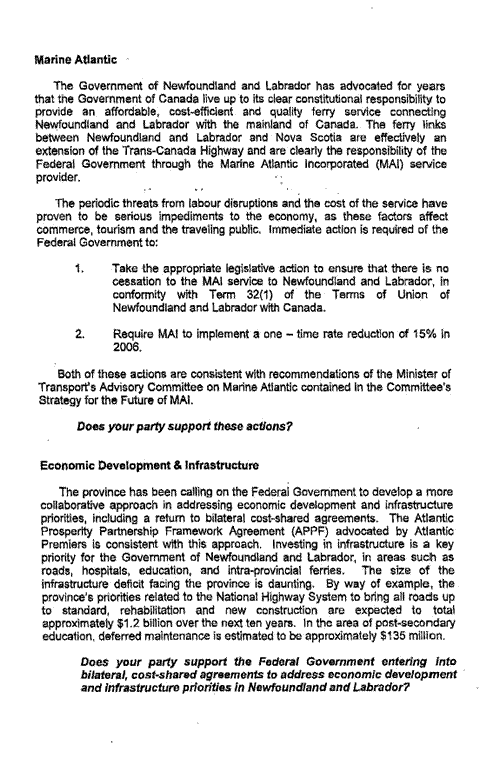
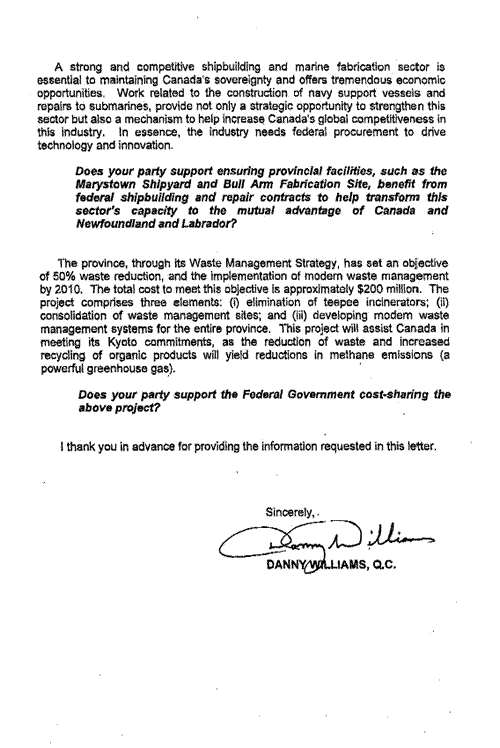
Danny Williams' letter to Santa
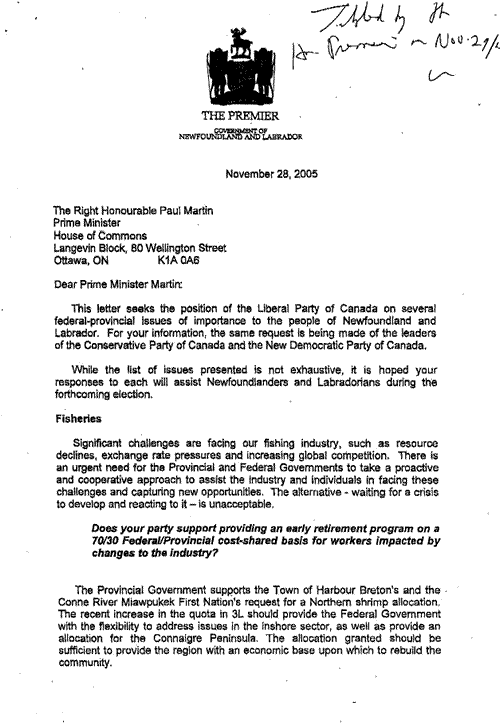
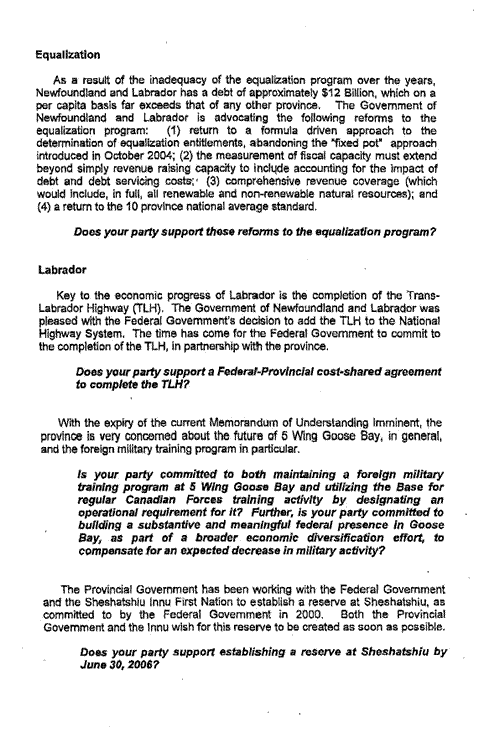
Tabled in the House of Assembly yesterday, here is a copy of Danny Williams letter to the federal party leaders.
The Premier likes to point out the success of his last such letter during the 2004 election.
Here's what actually happened:
The PM didn't respond to the letter. He stayed at the negotiating table and worked out the deal the Premier eventually signed.
Stephen Harper flatly rejected the premier's ideas on every level. If you doubt me, I'll post Harper's reply.
Jack Layton is the only guy who endorsed the Premier's position to the "t".
It'll be interesting to see what happens this time out.
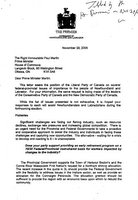
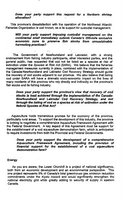
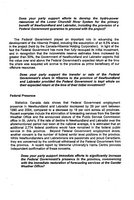
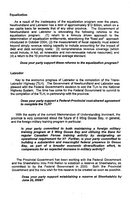
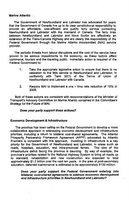
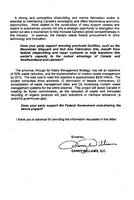
The Premier likes to point out the success of his last such letter during the 2004 election.
Here's what actually happened:
The PM didn't respond to the letter. He stayed at the negotiating table and worked out the deal the Premier eventually signed.
Stephen Harper flatly rejected the premier's ideas on every level. If you doubt me, I'll post Harper's reply.
Jack Layton is the only guy who endorsed the Premier's position to the "t".
It'll be interesting to see what happens this time out.


30 November 2005
SES Research - the pollster to watch
Building on the success of analysis for the Canadian parliamentary channel CPAC, pollster SES Research is launching a new nightly tracking survey during this election.
To keep abreast of the latest, accurate numbers, tune in or go to the the SES website.
To keep abreast of the latest, accurate numbers, tune in or go to the the SES website.
Rolling in the aisles
That's what voters in Newfoundland and Labrador will be doing when they read the story from the Globe and Mail that the federal Conservatives have targeted the riding of Avalon as a seat they can win in the upcoming election.
Minor problem: the Conservatives don't have a candidate there yet - despite obvious signs that john Efford wasn't running again. Last time things were so desperate that even John Crosbie mused about coming back to elected politics. That is, he mused about it until his wife, Jane, got wind of the windy former minister's bluster. Crosbie quickly pulled his horns in and went back to writing bitter tripe for a mainland newspaper chain that also boasts the wit if not the wisdom of bitter former cabinet minister Sheila Copps.
Popular local member of the House of Assembly Fabian Manning is being courted by the federal Conservatives. Outside the legislature the other day Manning gave a dozen solid reasons why he wouldn't seek the nomination. Then, Manning said he was still 50/50 and thinking about it. Unless Harper makes Fabe an offer he can't refuse, count on Manning staying put.
Meanwhile, the Conservatives held onto their two seats in Newfoundland and Labrador by a mere five percent last time out. Incumbents Loyola Hearn and Norm Doyle took a drubbing after the election for their stance on the offshore revenue deal. They voted for it before they voted against it and that tested the tolerance of even some staunch Tories.
Such was the din of disapproval that Hearn mused about going off fishing rather than run again. Doyle blamed "Liberal spin doctors" in St. John's for his problems. Try as I might, I couldn't get Norm to blame me personally.
If nothing else, the Globe piece represents putting a brave face on things. Go back to the polls and check the seat counters. Every scenario based on current numbers show the Conservatives losing seats in this election. Even in the Globe story, the Connie insiders admit that they expect to lose seats in the West to New Democrats.
They may lose seats in other places too, just like it is possible the Conservatives will pick up a bunch. If it nets out to fewer seats on The Day, then this election may well have been for naught.
Minor problem: the Conservatives don't have a candidate there yet - despite obvious signs that john Efford wasn't running again. Last time things were so desperate that even John Crosbie mused about coming back to elected politics. That is, he mused about it until his wife, Jane, got wind of the windy former minister's bluster. Crosbie quickly pulled his horns in and went back to writing bitter tripe for a mainland newspaper chain that also boasts the wit if not the wisdom of bitter former cabinet minister Sheila Copps.
Popular local member of the House of Assembly Fabian Manning is being courted by the federal Conservatives. Outside the legislature the other day Manning gave a dozen solid reasons why he wouldn't seek the nomination. Then, Manning said he was still 50/50 and thinking about it. Unless Harper makes Fabe an offer he can't refuse, count on Manning staying put.
Meanwhile, the Conservatives held onto their two seats in Newfoundland and Labrador by a mere five percent last time out. Incumbents Loyola Hearn and Norm Doyle took a drubbing after the election for their stance on the offshore revenue deal. They voted for it before they voted against it and that tested the tolerance of even some staunch Tories.
Such was the din of disapproval that Hearn mused about going off fishing rather than run again. Doyle blamed "Liberal spin doctors" in St. John's for his problems. Try as I might, I couldn't get Norm to blame me personally.
If nothing else, the Globe piece represents putting a brave face on things. Go back to the polls and check the seat counters. Every scenario based on current numbers show the Conservatives losing seats in this election. Even in the Globe story, the Connie insiders admit that they expect to lose seats in the West to New Democrats.
They may lose seats in other places too, just like it is possible the Conservatives will pick up a bunch. If it nets out to fewer seats on The Day, then this election may well have been for naught.
Election notes on a slow second day
Grewal is out. Geez, what a surprise.
Harper plans to campaign on cleaning up government, getting tough on crime and lowering taxes.
When you look at those three items (oh yeah and he mentioned Gomery but not by name), consider the poll by the Strategic Counsel and the issues that are important to Canadians. Corruption is the second largest issue for Canadians, but only 13% of Canadians. taxes are a concern for 5% of those polled. That's it. 5%. 'Tough on crime" or anything like it doesn't register.
Now in the past, some Connie bloggers have taken to bashing Allan Gregg over the head for being a sell-out. That is, they bash him when his polls give them numbers they don't like. I just note that the correlations or in some cases lack of correlations are interesting.
For my part, I am not sure that any of these points are vote tippers - that is, I am not sure which ones are the basis on which people will tip their vote one way or another.
Then over at CTV, you can find this comment from the Conservative leader on re-opening the equal marriage debate. Note the comment that Harper brought the issue up after his staff cut off the question period. It's a safe issue for Harper: Connies love it and he doesn't lose any votes by sticking with it. By contrast, shifting his position would mean that he'd actually lose the hard-core right wing, on which the whole right movement is built. Heck, he'd even have nominated candidates walking away from him if he stood up for equal marriage.
While I may disagree with his his stand, Harper's political posture is smart politics for him.
Meanwhile, the Globe is putting a dark cast on the story, highlighting the problems with re-opening a contentious issue from the last election. The National Lampoon is telling it as a great move forward, by protecting gay couples who are already married, even if parliament at some undefined point decides to repeal the equal marriage bill.
Harper plans to campaign on cleaning up government, getting tough on crime and lowering taxes.
When you look at those three items (oh yeah and he mentioned Gomery but not by name), consider the poll by the Strategic Counsel and the issues that are important to Canadians. Corruption is the second largest issue for Canadians, but only 13% of Canadians. taxes are a concern for 5% of those polled. That's it. 5%. 'Tough on crime" or anything like it doesn't register.
Now in the past, some Connie bloggers have taken to bashing Allan Gregg over the head for being a sell-out. That is, they bash him when his polls give them numbers they don't like. I just note that the correlations or in some cases lack of correlations are interesting.
For my part, I am not sure that any of these points are vote tippers - that is, I am not sure which ones are the basis on which people will tip their vote one way or another.
Then over at CTV, you can find this comment from the Conservative leader on re-opening the equal marriage debate. Note the comment that Harper brought the issue up after his staff cut off the question period. It's a safe issue for Harper: Connies love it and he doesn't lose any votes by sticking with it. By contrast, shifting his position would mean that he'd actually lose the hard-core right wing, on which the whole right movement is built. Heck, he'd even have nominated candidates walking away from him if he stood up for equal marriage.
While I may disagree with his his stand, Harper's political posture is smart politics for him.
Meanwhile, the Globe is putting a dark cast on the story, highlighting the problems with re-opening a contentious issue from the last election. The National Lampoon is telling it as a great move forward, by protecting gay couples who are already married, even if parliament at some undefined point decides to repeal the equal marriage bill.
29 November 2005
Rain Man needs some help deciding
Loyola Sullivan, known to some as the Rain Man for his ability to rattle off figures like ""about a hundred million dollars. uh huh. a hundred million dollars" without really saying anything, got some big help today from auditor general John Noseworthy.
The AG made some really obvious but sensible suggestions about the uses to which the offshore revenue windfall could be put. They are obvious to anyone except, maybe, the Rain Man.
Noseworthy noted that as it currently sits in the bank, the offshore cash is earning interest at a rate of about $60 million annually. Putting that cash toward the unfunded pension liabilities would produce an additional $90 million (or a total of $150 million per year) than can be directed to program spending or used to pay down the long-term debt.
In a media scrum outside the legislature, a grinning Sullivan said he has made recommendations to cabinet on how to dispose of "surplus cash" the government may have on hand. Truthfully, it is hard to know what Sullivan has to grin about.
First of all, he should have developed a plan for debt and deficit reduction - and announced it - long before now.
Second, his talk of "surplus cash" makes a mockery of his own announcement within the past few weeks that he had eliminated the current deficit and produce a surplus - overall - of less than $2.0 million. Sullivan's previous statement made it appear as though the cash surplus this year of well over $300 million by year end - had already been allocated and spent.
His comments today confirm the point made on the Bond Papers that in fact, Sullivan had erroneously hinted that he had no surplus on a cash basis. Face it, if there was no surplus cash - or very little - then there'd be no need for a cabinet paper.
Third, there is every sign that other cabinet ministers including the Premier have covetous eyes on the offshore cash. And that is the truly alarming prospect, as noted ">here previously. We will have considerable pressure to spend our future coming from within the provincial government. It might be too late for Loyola Sullivan to take good advice and do what is in the long term best interest of the province.
His fascination with numbers and decimal points seems to have overshadowed his ability to develop a sound plan and get on with the real job of a cabinet minister - making decisions.
The rain Man got some free advice today.
He should take advice from John Noseworthy and get on with the job of being finance minister...
rather than patting himself on the back when it suits his purpose and trotting out large numbers to frighten people when that suits his purpose.
Then Sullivan would have something to grin about.
And so would the rest of us.
The AG made some really obvious but sensible suggestions about the uses to which the offshore revenue windfall could be put. They are obvious to anyone except, maybe, the Rain Man.
Noseworthy noted that as it currently sits in the bank, the offshore cash is earning interest at a rate of about $60 million annually. Putting that cash toward the unfunded pension liabilities would produce an additional $90 million (or a total of $150 million per year) than can be directed to program spending or used to pay down the long-term debt.
In a media scrum outside the legislature, a grinning Sullivan said he has made recommendations to cabinet on how to dispose of "surplus cash" the government may have on hand. Truthfully, it is hard to know what Sullivan has to grin about.
First of all, he should have developed a plan for debt and deficit reduction - and announced it - long before now.
Second, his talk of "surplus cash" makes a mockery of his own announcement within the past few weeks that he had eliminated the current deficit and produce a surplus - overall - of less than $2.0 million. Sullivan's previous statement made it appear as though the cash surplus this year of well over $300 million by year end - had already been allocated and spent.
His comments today confirm the point made on the Bond Papers that in fact, Sullivan had erroneously hinted that he had no surplus on a cash basis. Face it, if there was no surplus cash - or very little - then there'd be no need for a cabinet paper.
Third, there is every sign that other cabinet ministers including the Premier have covetous eyes on the offshore cash. And that is the truly alarming prospect, as noted ">here previously. We will have considerable pressure to spend our future coming from within the provincial government. It might be too late for Loyola Sullivan to take good advice and do what is in the long term best interest of the province.
His fascination with numbers and decimal points seems to have overshadowed his ability to develop a sound plan and get on with the real job of a cabinet minister - making decisions.
The rain Man got some free advice today.
He should take advice from John Noseworthy and get on with the job of being finance minister...
rather than patting himself on the back when it suits his purpose and trotting out large numbers to frighten people when that suits his purpose.
Then Sullivan would have something to grin about.
And so would the rest of us.
28 November 2005
Election madness
Without a shred of evidence other than a vague "suspicion", Conservative member of parliament Jason Kenney is calling for an investigation of supposed insider trading that preceded last week's announcement by the federal government on income tax policy.
Kenney has no evidence of anything.
He admits that.
Just to make sure there is absolutely no doubt about it, let's repeat that:
Kenney has absolutely no evidence of anything wrong here.
and he admits he has no evidence.
Yet he makes a claim that, at its heart, suggests criminal activity on part of officials in Ralph Goodale's office.
The New Democrats are chiming in with the same call.
And the same absence of evidence.
As Canadian Press notes, there was a great deal of speculation in advance of the announcement, which took place after trading closed for the day.
However, speculation is what the stock market is all about. Changes in trading patterns don't necessarily mean anyone is up to anything criminal.
Meanwhile, both the police forces and the securities regulatory bodies in the country spend a lot of time keeping an eye out for just the sort of illegal activity Kenney is talking about. If they had any suspicions then, rest assured, they'd be all over this little situation.
As it is, all we have is taste of the utter insanity of the forthcoming election campaign.
People will be claiming all sorts of things without any evidence.
Sadly, we can likely also expect yet more of the "Libranos" and "Liberals = organized crime" crap that has been streaming from the Conservative benches for months.
Go back a few days and check the latest poll results, as well as the likely results, and you'll understand why the Conservative messaging is taking on an increasingly shrill tone. Compare it to the New Democrats' comments.
With the exception of the "Hey, I am implying criminal action but denying I am implying criminal action" stuff, the Dippers have been decidedly less shrill than their Connie partners.
Kenney has no evidence of anything.
He admits that.
Just to make sure there is absolutely no doubt about it, let's repeat that:
Kenney has absolutely no evidence of anything wrong here.
and he admits he has no evidence.
Yet he makes a claim that, at its heart, suggests criminal activity on part of officials in Ralph Goodale's office.
The New Democrats are chiming in with the same call.
And the same absence of evidence.
As Canadian Press notes, there was a great deal of speculation in advance of the announcement, which took place after trading closed for the day.
However, speculation is what the stock market is all about. Changes in trading patterns don't necessarily mean anyone is up to anything criminal.
Meanwhile, both the police forces and the securities regulatory bodies in the country spend a lot of time keeping an eye out for just the sort of illegal activity Kenney is talking about. If they had any suspicions then, rest assured, they'd be all over this little situation.
As it is, all we have is taste of the utter insanity of the forthcoming election campaign.
People will be claiming all sorts of things without any evidence.
Sadly, we can likely also expect yet more of the "Libranos" and "Liberals = organized crime" crap that has been streaming from the Conservative benches for months.
Go back a few days and check the latest poll results, as well as the likely results, and you'll understand why the Conservative messaging is taking on an increasingly shrill tone. Compare it to the New Democrats' comments.
With the exception of the "Hey, I am implying criminal action but denying I am implying criminal action" stuff, the Dippers have been decidedly less shrill than their Connie partners.
The blame game, a lame game
Flip over to RGL and you'll see a lengthy commentary that backs Loyola Hearn's contention that the federal government, i.e. the Department of Fisheries and Oceans (DFO), is solely responsible for the collapse of the cod stocks and their failure to recover.
What Liam misses, or choses to ignore, is that the latest report from the Commons fisheries committee makes it clear that there is enough blame to go around for everyone in the fishery. It is misleading to adopt a narrow approach to the definition of "management" such that it ignores the political, social and economic context in which governments make decisions. That is, if we take a narrow approach, as Liam and Loyola do, then we are apt to repeat the same errors made in the past.
Liam may find it painful that the report actually does not support his own pet views. However, he cannot blame me for this by asserting that the fisheries committee's own conclusions, as quoted here already, are actually mine. The words I used are the words the committee used.
There is no small irony here that when DFO - actually politicians - make(s) bad decisions, as occurred in the 1980s and 1990s in response to political pressure, the federal government is pilloried. One example is the recreational fishery and limited commercial fishery that began in 1998. Then, when it makes good decisions - such as resisting the calls for a wider recreational fishery and wider commercial fishery, despite evidence that the fish stocks could not sustain the new fisheries - DFO is once again attacked for not responding to political pressure.
What the latest report also contains are some concrete proposals that would change the overall management system, which the committee calls dysfunctional. In other words, they identify the problem and propose a way to fix it or at least start to fix it. One such suggestion is the use of local fishermen's committees to work with DFO on setting quotas for certain species and in certain locales.
The success of this approach was noted in several previous posts. As usual, people seem to ignore good ideas in favour of playing the blame game.
And ultimately, the blame game is a fool's errand. Focusing on blame alone provides no guide to future action. Often, the solutions proposed merely repeat past errors or do nothing to make the substantive changes in fisheries management which the Commons committee clearly thinks are necessary.
This brings us back to the original post and comments by Loyola Hearn. The member for St. John's South-Mount Pearl may wish to blame the federal government for the cod collapse. If he does, then he should make it plain those are his conclusions. If he doesn't agree with the report, then he has the responsibility to table a dissenting opinion - supported by evidence.
The problem comes when Hearn tables a report that doesn't support his conclusions and makes comments to the media that are, at best, misleading. Then he is doing a disservice to everyone involved in the report and in the fishery.
And that was the point of the previous post.
It is a point that gets conveniently ignored by some, along with the mountains of clear evidence that demonstrate Hearn's ideas are not based on fact.
What Liam misses, or choses to ignore, is that the latest report from the Commons fisheries committee makes it clear that there is enough blame to go around for everyone in the fishery. It is misleading to adopt a narrow approach to the definition of "management" such that it ignores the political, social and economic context in which governments make decisions. That is, if we take a narrow approach, as Liam and Loyola do, then we are apt to repeat the same errors made in the past.
Liam may find it painful that the report actually does not support his own pet views. However, he cannot blame me for this by asserting that the fisheries committee's own conclusions, as quoted here already, are actually mine. The words I used are the words the committee used.
There is no small irony here that when DFO - actually politicians - make(s) bad decisions, as occurred in the 1980s and 1990s in response to political pressure, the federal government is pilloried. One example is the recreational fishery and limited commercial fishery that began in 1998. Then, when it makes good decisions - such as resisting the calls for a wider recreational fishery and wider commercial fishery, despite evidence that the fish stocks could not sustain the new fisheries - DFO is once again attacked for not responding to political pressure.
What the latest report also contains are some concrete proposals that would change the overall management system, which the committee calls dysfunctional. In other words, they identify the problem and propose a way to fix it or at least start to fix it. One such suggestion is the use of local fishermen's committees to work with DFO on setting quotas for certain species and in certain locales.
The success of this approach was noted in several previous posts. As usual, people seem to ignore good ideas in favour of playing the blame game.
And ultimately, the blame game is a fool's errand. Focusing on blame alone provides no guide to future action. Often, the solutions proposed merely repeat past errors or do nothing to make the substantive changes in fisheries management which the Commons committee clearly thinks are necessary.
This brings us back to the original post and comments by Loyola Hearn. The member for St. John's South-Mount Pearl may wish to blame the federal government for the cod collapse. If he does, then he should make it plain those are his conclusions. If he doesn't agree with the report, then he has the responsibility to table a dissenting opinion - supported by evidence.
The problem comes when Hearn tables a report that doesn't support his conclusions and makes comments to the media that are, at best, misleading. Then he is doing a disservice to everyone involved in the report and in the fishery.
And that was the point of the previous post.
It is a point that gets conveniently ignored by some, along with the mountains of clear evidence that demonstrate Hearn's ideas are not based on fact.
26 November 2005
The political fish
It is hard to know if VOCM got it wrong or if Loyola Hearn actually blamed federal mismanagement for the continued poor state of cod stocks offshore Newfoundland.
Hearn is a member of the the House of Commons standing committee that just released a report on the cod stocks.
VOCM reports that Hearn "says the destruction of the Northern Cod is a direct result of federal mismanagement". VOCM also reports that Hearn is calling on the federal government to implement the recommendations contained in the report linked above.
Check The Telegram for Saturday, November 26, 2005 and there is another quote by Hearn, the guy who tabled the committee report in the Commons: "the destruction of the northern cod and its lack of recovery is a direct result of federal mismanagement."
The odd thing is that Hearn is not quoting the report when he blames the federal government for the lack of cod. Here's what the report actually says in black and white:
Hearn is a member of the the House of Commons standing committee that just released a report on the cod stocks.
VOCM reports that Hearn "says the destruction of the Northern Cod is a direct result of federal mismanagement". VOCM also reports that Hearn is calling on the federal government to implement the recommendations contained in the report linked above.
Check The Telegram for Saturday, November 26, 2005 and there is another quote by Hearn, the guy who tabled the committee report in the Commons: "the destruction of the northern cod and its lack of recovery is a direct result of federal mismanagement."
The odd thing is that Hearn is not quoting the report when he blames the federal government for the lack of cod. Here's what the report actually says in black and white:
...Overfishing has been clearly identified as the major factor in the decline of cod and other groundfish stocks, but not as the only factor. According to a number of past reports, a combination of factors was responsible, and fishermen, processors, scientists, fisheries managers and politicians all made mistakes. As stated by the Fisheries Resource Conservation Council (FRCC) in its 1997 report, "The fishery crisis cannot be related to a single cause or blamed on a single group: it is the failure of our whole fisheries system."
In part, as a result of the "failure of our whole fisheries system," the House of Commons Standing Committee on Fisheries and Oceans agreed on 8 February 2005 to undertake a study of the northern cod including the events leading to the collapse of the fishery and the failure of the stock to re-establish itself since the moratorium....[Page 2]
It really doesn't get any clearer than that. The cod stocks collapsed as a result of the entire fisheries system including both federal and provincial governments, politicians, processors, and fishermen.
If mismanagement was the cause, as the quote above notes and as the subsequent pages of the report document, the "mismanagement" extended to every sector of the industry.
Only Loyola Hearn can tell us why he misrepresented in such a blatant way the findings of a committee whose report he was tabling in parliament. It is tempting, and indeed, easiest, to simply put Hearn's comments down to the sort of old-fashioned "tell em anything" politics that we have heard from him so many times in the past.
Hearn has repeatedly demonstrated his love affair with misrepresentation. During the offshore revenue discussions over the past two years, for example, Hearn got so many basic facts wrong about oil and gas one would have a hard time believing he had been a provincial cabinet minister at the time the real Atlantic Accord was signed and passed by the legislature.
This is by no means a minor issue. The conclusions of a parliamentary committee should hold weight - indeed Hearn's words have been reported because the committee is taken generally as an important group, one with views that should be heeded.
The committee's report contains a great deal of valuable information and a solid set of recommendations. The report proposes a limited commercial fishery be re-opened where such a fishery can be supported by the populations. It calls for increased scientific research, a call that was seemingly heeded by an announcement by the federal fisheries minister of increased scientific research funding.
The report also contains recommendation for even stronger action against domestic overfishing:
RECOMMENDATION 5
That the Minister of Fisheries and Oceans commit to amending the Fisheries Act to deal with license violations using administrative sanctions subject to appeal through arm'’s-length tribunals;
That, in the interim, the Attorney General of Canada instruct federal prosecutors involved in Fisheries Actlicenseee violation cases to bring to the attention of the court, prior to sentencing, the total cost to the Canadian taxpayer of investigating and prosecuting the offence, and to push for the maximum penalty under the law at sentencing; and
That any financial proceeds forfeited as a result of a conviction for license violations be used to support an enhanced dockside monitoring or some other equally important program.
This is a truly remarkable statement, given Hearn's claim that it was the federal government that bears responsibility for the death of the commercial cod fishery. The committee advocated stronger punishment for poaching and other forms of illegal fishing because witnesses who appeared before it and other evidence accumulated during its deliberations pointed precisely to domestic overfishing as a contributing factor in the decimation of the northern codstocks.
Yet the value in the committee's report does not end there. It's next recommendation is that the federal government create regional harvesting or conservation councils to give fishermen greater input into management decisions. The federal politicians - perhaps with the exception of Hearn - have clearly seen the benefit from similar committees at places like the Eastport peninsula.
This is a little known project but it has proven enormously successful. Local fisheries committees advise the federal fisheries minister on fish quotas. Their advice which combines the best scientific information plus the fishermen's own observations have led to dramatic improvements in the health of stocks such as lobster and have led to a dramatic decline - a near elimination - of poaching and other similar crimes.
This is the sort of progressive management approach that the Department of Fisheries and oceans has been quietly implementing. But few know of it when the news sadly is consumed by the rantings of men who once held positions of great political and industrial influence, but who offer little in the way of meaningful input. The only thing the have managed to do is distract people from both the real issues and the facts of the matter at hand.
All this leads back to Hearn and his false statements.
One of the strongest parts of the fisheries committee report is the comparison between what happened in Canada and what happened elsewhere in the face of problems in the cod fishery. In Canada, politicians seemed unable to ignore the pleadings of the fishing industry that quotas be maintaiend at levels the stocks could not support. They played political games with fish instead of acting responsibly. Our collective reward is the decimation of a fish stock that once fed generations throughout the North Atlantic world.
What we see in Hearn's blatant misrepresentation is truly yet more of the same political pandering to a small interest group against the facts, against the best advice. Ignored are the genuinely positive moves on enforcement of rules and on progressive management. Trotted out, instead, are the hoary myths, just in time for another election.
Having read both the Commons committee report and news coverage over the past two days, one can only agree with Telegram columnist and long-time fisheries reporter Joe Walsh. It is time to get cod out of the pork barrel.
Rather than focusing solely on the current federal government as he did, Walsh should have tossed Loyola Hearn into the mix. Hearn's interventions on fisheries issues since he went to Ottawa have been long on the pork and short - extremely short - on anything approaching a new idea that can be backed by facts.
The fisheries committee report spends a good deal of time documenting the mistakes of the 1980s.
Loyola Hearn should know about them. He sat in a provincial cabinet at the time.
One would have hoped he had learned from mistakes of the past.
All that comes to mind is another mangled phrase by Hearn's former cabinet mate and premier Tom Rideout. It had something to do with small, malodourous creatures that could not change their spots.
Strong language, to be sure, but seemingly appropriate on so many levels.
In part, as a result of the "failure of our whole fisheries system," the House of Commons Standing Committee on Fisheries and Oceans agreed on 8 February 2005 to undertake a study of the northern cod including the events leading to the collapse of the fishery and the failure of the stock to re-establish itself since the moratorium....[Page 2]
It really doesn't get any clearer than that. The cod stocks collapsed as a result of the entire fisheries system including both federal and provincial governments, politicians, processors, and fishermen.
If mismanagement was the cause, as the quote above notes and as the subsequent pages of the report document, the "mismanagement" extended to every sector of the industry.
Only Loyola Hearn can tell us why he misrepresented in such a blatant way the findings of a committee whose report he was tabling in parliament. It is tempting, and indeed, easiest, to simply put Hearn's comments down to the sort of old-fashioned "tell em anything" politics that we have heard from him so many times in the past.
Hearn has repeatedly demonstrated his love affair with misrepresentation. During the offshore revenue discussions over the past two years, for example, Hearn got so many basic facts wrong about oil and gas one would have a hard time believing he had been a provincial cabinet minister at the time the real Atlantic Accord was signed and passed by the legislature.
This is by no means a minor issue. The conclusions of a parliamentary committee should hold weight - indeed Hearn's words have been reported because the committee is taken generally as an important group, one with views that should be heeded.
The committee's report contains a great deal of valuable information and a solid set of recommendations. The report proposes a limited commercial fishery be re-opened where such a fishery can be supported by the populations. It calls for increased scientific research, a call that was seemingly heeded by an announcement by the federal fisheries minister of increased scientific research funding.
The report also contains recommendation for even stronger action against domestic overfishing:
RECOMMENDATION 5
That the Minister of Fisheries and Oceans commit to amending the Fisheries Act to deal with license violations using administrative sanctions subject to appeal through arm'’s-length tribunals;
That, in the interim, the Attorney General of Canada instruct federal prosecutors involved in Fisheries Actlicenseee violation cases to bring to the attention of the court, prior to sentencing, the total cost to the Canadian taxpayer of investigating and prosecuting the offence, and to push for the maximum penalty under the law at sentencing; and
That any financial proceeds forfeited as a result of a conviction for license violations be used to support an enhanced dockside monitoring or some other equally important program.
This is a truly remarkable statement, given Hearn's claim that it was the federal government that bears responsibility for the death of the commercial cod fishery. The committee advocated stronger punishment for poaching and other forms of illegal fishing because witnesses who appeared before it and other evidence accumulated during its deliberations pointed precisely to domestic overfishing as a contributing factor in the decimation of the northern codstocks.
Yet the value in the committee's report does not end there. It's next recommendation is that the federal government create regional harvesting or conservation councils to give fishermen greater input into management decisions. The federal politicians - perhaps with the exception of Hearn - have clearly seen the benefit from similar committees at places like the Eastport peninsula.
This is a little known project but it has proven enormously successful. Local fisheries committees advise the federal fisheries minister on fish quotas. Their advice which combines the best scientific information plus the fishermen's own observations have led to dramatic improvements in the health of stocks such as lobster and have led to a dramatic decline - a near elimination - of poaching and other similar crimes.
This is the sort of progressive management approach that the Department of Fisheries and oceans has been quietly implementing. But few know of it when the news sadly is consumed by the rantings of men who once held positions of great political and industrial influence, but who offer little in the way of meaningful input. The only thing the have managed to do is distract people from both the real issues and the facts of the matter at hand.
All this leads back to Hearn and his false statements.
One of the strongest parts of the fisheries committee report is the comparison between what happened in Canada and what happened elsewhere in the face of problems in the cod fishery. In Canada, politicians seemed unable to ignore the pleadings of the fishing industry that quotas be maintaiend at levels the stocks could not support. They played political games with fish instead of acting responsibly. Our collective reward is the decimation of a fish stock that once fed generations throughout the North Atlantic world.
What we see in Hearn's blatant misrepresentation is truly yet more of the same political pandering to a small interest group against the facts, against the best advice. Ignored are the genuinely positive moves on enforcement of rules and on progressive management. Trotted out, instead, are the hoary myths, just in time for another election.
Having read both the Commons committee report and news coverage over the past two days, one can only agree with Telegram columnist and long-time fisheries reporter Joe Walsh. It is time to get cod out of the pork barrel.
Rather than focusing solely on the current federal government as he did, Walsh should have tossed Loyola Hearn into the mix. Hearn's interventions on fisheries issues since he went to Ottawa have been long on the pork and short - extremely short - on anything approaching a new idea that can be backed by facts.
The fisheries committee report spends a good deal of time documenting the mistakes of the 1980s.
Loyola Hearn should know about them. He sat in a provincial cabinet at the time.
One would have hoped he had learned from mistakes of the past.
All that comes to mind is another mangled phrase by Hearn's former cabinet mate and premier Tom Rideout. It had something to do with small, malodourous creatures that could not change their spots.
Strong language, to be sure, but seemingly appropriate on so many levels.
25 November 2005
Find. Fix. Fire.
There's a reason why in both politics and the army they call it a campaign.
Winning requires strategy, logistics, co-ordination and flexibility.
There is only one winner.
Everyone else is a loser.
No one wants to be the loser.
The basic approach in a campaign consists of three words: find, fix and fire.
Find: This consists of finding your voters and those who will vote for The Other Guy. Opinion polling helps figure out the rough percentages and what issues and attitudes are motivating voters. A good voter identification program - polling by door-knocking or telephone refines the overall picture on a voting poll by voting poll basis.
You also want to find any swingers or wafflers. Those are the voters who either haven't committed yet, are leaning one way or the other (you need to find that out as well) and those who are in the other camp but who might be persuaded to switch sides.
Fix: Fix in this context means to hold your own voters in place. Political advertising and other communications are designed to reinforce your own supporters and get them worked up enough to want to go to the polls.
Fix, in this context, also involves efforts to dislodge TOG's voters. Plenty of people talk about negative campaigning and attack ads and while they are usually denounced, a properly conceived and executed attack phase of the campaign has proven extremely effective time and again, for party after party in doing one thing - suppressing the TOG's supporters.
Political communications in the fix portion of a campaign are also aimed to some extent at the swingers. The basic goal is to suppress the other guy's leaners, firm up the ones leaning to you, steal some of his weak ones and attract more of the undecideds.
Fire: Having found and fixed 'em, the last thing to do is to fire your voters into the polling booth on voting day.
This is where the voter identification campaign really pays off. Voting day is the most hectic day of the campaign: workers call identified party supporters and encourage them to vote. Drivers are dispatched to give people a free lift to the nearest polling station.
Scrutineers at the polling stations cross off voters as they come and send their data back to headquarters so identified supporters are crossed off the lists.
Energy then focuses in the last hours and minutes of the day to getting every last identified voter to a polling booth. Dragging, as it is commonly called, is about literally dragging anyone who hasn't voted to the polls.
There's an old saying that amateurs talk strategy and tactics while professionals talk logistics.
Well, in politics, the logistics are all about the voter identification program and the entire operation devoted to getting your supporters into a booth where they can mark an "x" for the right candidate.
Without it, you don't stand a hope in hell of winning.
But, in politics as in a military campaign, dominating the opinion environment through political communications makes the job of finding, fixing and firing that much easier. Increasingly, successful campaigns rely on solid comms support coupled with the log work for success
Political communications - the news releases, events, householders, buttons, signs and a website - play a key role. Screw that up and you can kiss the votes good bye. The best voter ID project in history won't save you.
Flood a newsroom with bullshit releases and you'll likely alienate reporters you need in order to get your messages on important issues carried to voters. Feed them pap or duck them and they'll faithfully report your failings to everyone who listens, watches or reads their stuff.
Ask municipal candidates in the recent St. John's election about that sort of stuff.
Issue a news release that calls your opponent a child molester's best friend - without solid evidence - then back the mistake to the hilt and you can cost yourself the campaign and with it victory.
Ask Stephen Harper about that one.
One of the telling features in the upcoming campaign will be political communications and, unlike voter ID programs, it is the one that is most visible.
So when the writ drops next week -*sigh* - pay close attention to the stuff in your mailbox, and on your television, radio, in the newspapers, or on the Internet. You'll be able to tell a lot about the strategies being employed simply through careful observation.
And among the commentators cropping up on the news, you'll also be able to spot the amateurs and the professionals.
Winning requires strategy, logistics, co-ordination and flexibility.
There is only one winner.
Everyone else is a loser.
No one wants to be the loser.
The basic approach in a campaign consists of three words: find, fix and fire.
Find: This consists of finding your voters and those who will vote for The Other Guy. Opinion polling helps figure out the rough percentages and what issues and attitudes are motivating voters. A good voter identification program - polling by door-knocking or telephone refines the overall picture on a voting poll by voting poll basis.
You also want to find any swingers or wafflers. Those are the voters who either haven't committed yet, are leaning one way or the other (you need to find that out as well) and those who are in the other camp but who might be persuaded to switch sides.
Fix: Fix in this context means to hold your own voters in place. Political advertising and other communications are designed to reinforce your own supporters and get them worked up enough to want to go to the polls.
Fix, in this context, also involves efforts to dislodge TOG's voters. Plenty of people talk about negative campaigning and attack ads and while they are usually denounced, a properly conceived and executed attack phase of the campaign has proven extremely effective time and again, for party after party in doing one thing - suppressing the TOG's supporters.
Political communications in the fix portion of a campaign are also aimed to some extent at the swingers. The basic goal is to suppress the other guy's leaners, firm up the ones leaning to you, steal some of his weak ones and attract more of the undecideds.
Fire: Having found and fixed 'em, the last thing to do is to fire your voters into the polling booth on voting day.
This is where the voter identification campaign really pays off. Voting day is the most hectic day of the campaign: workers call identified party supporters and encourage them to vote. Drivers are dispatched to give people a free lift to the nearest polling station.
Scrutineers at the polling stations cross off voters as they come and send their data back to headquarters so identified supporters are crossed off the lists.
Energy then focuses in the last hours and minutes of the day to getting every last identified voter to a polling booth. Dragging, as it is commonly called, is about literally dragging anyone who hasn't voted to the polls.
There's an old saying that amateurs talk strategy and tactics while professionals talk logistics.
Well, in politics, the logistics are all about the voter identification program and the entire operation devoted to getting your supporters into a booth where they can mark an "x" for the right candidate.
Without it, you don't stand a hope in hell of winning.
But, in politics as in a military campaign, dominating the opinion environment through political communications makes the job of finding, fixing and firing that much easier. Increasingly, successful campaigns rely on solid comms support coupled with the log work for success
Political communications - the news releases, events, householders, buttons, signs and a website - play a key role. Screw that up and you can kiss the votes good bye. The best voter ID project in history won't save you.
Flood a newsroom with bullshit releases and you'll likely alienate reporters you need in order to get your messages on important issues carried to voters. Feed them pap or duck them and they'll faithfully report your failings to everyone who listens, watches or reads their stuff.
Ask municipal candidates in the recent St. John's election about that sort of stuff.
Issue a news release that calls your opponent a child molester's best friend - without solid evidence - then back the mistake to the hilt and you can cost yourself the campaign and with it victory.
Ask Stephen Harper about that one.
One of the telling features in the upcoming campaign will be political communications and, unlike voter ID programs, it is the one that is most visible.
So when the writ drops next week -*sigh* - pay close attention to the stuff in your mailbox, and on your television, radio, in the newspapers, or on the Internet. You'll be able to tell a lot about the strategies being employed simply through careful observation.
And among the commentators cropping up on the news, you'll also be able to spot the amateurs and the professionals.
Subscribe to:
Posts (Atom)